
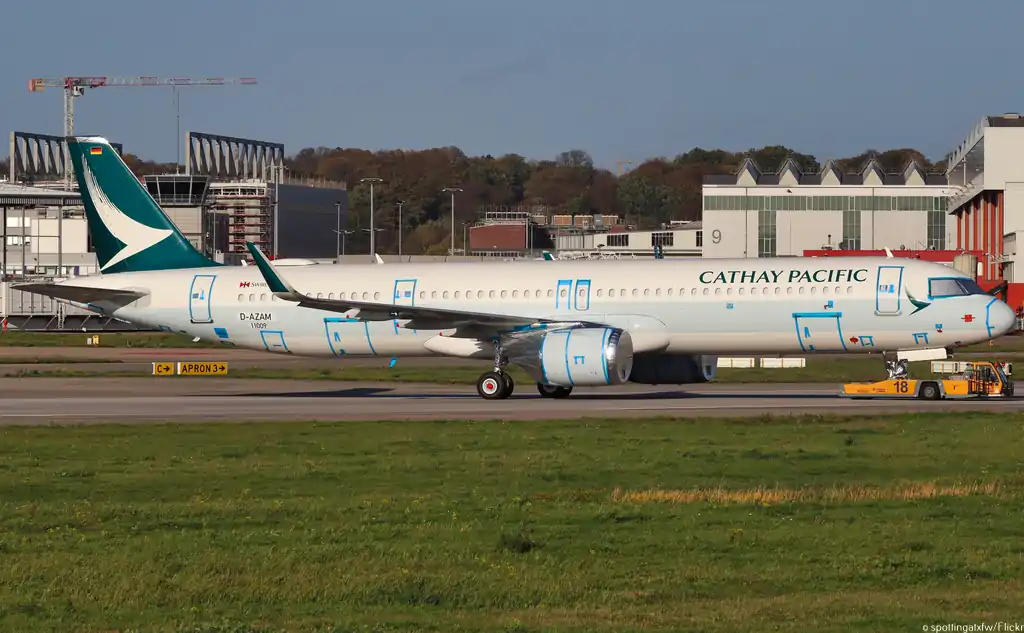
Cathay Pacific Airways, the renowned Hong Kong-based airline, has announced a significant expansion of its fleet with the purchase of 32 Airbus A321-200neo aircraft from Airbus. The deal, valued at a base price of $4.66 billion, comes as part of the airline's ongoing efforts to modernize and enhance its services.
A Strategic Move
Cathay Pacific's decision to acquire 32 Airbus A321-200neo aircraft is a strategic move that follows a previous agreement dating back to September 2017. This agreement, established between an Airbus affiliate and Cathay Pacific's aircraft acquisition facilitators, laid the foundation for this substantial fleet expansion.
Commitment to Innovation and Passenger Comfort
Cathay Pacific's decision to invest in the Airbus A321-200neo aircraft underscores its commitment to innovation and passenger comfort. These next-generation aircraft are known for their fuel efficiency, reduced environmental footprint, and enhanced passenger amenities. As the aviation industry continues to evolve, Cathay Pacific is positioning itself as a leader in adopting cutting-edge technology and sustainable practices.
Airbus A321-200neo: The Future of Air Travel

The Airbus A321-200neo is part of the A320neo family, which is renowned for its advanced design and operational efficiency. These aircraft are equipped with the latest technology, including fuel-efficient engines and aerodynamic improvements, making them environmentally friendly and cost-effective for airlines. Passengers can also look forward to an upgraded in-flight experience with modern cabin features, including larger windows and improved cabin pressure for a more comfortable journey.
Enhancing Fleet Capacity
These newly acquired aircraft are expected to bolster the fleet capacity of one of Cathay Pacific's subsidiaries, Hong Kong Express. With the delivery of these state-of-the-art Airbus A321neo aircraft anticipated by the end of 2029, Cathay Pacific aims to enhance its operational capabilities and better serve its growing customer base.
Shareholder Approval
In a notable development, the acquisition has received approval from Hong Kong-based conglomerate Swire Pacific and Air China, both of which collectively hold more than 50% of Cathay Pacific's voting rights. It's important to note that Swire Pacific and Air China have no direct interest in the transaction other than as shareholders, highlighting their support for Cathay Pacific's strategic decisions.
Cathay Pacific expressed its gratitude for the approval, underscoring the importance of collaborative decision-making within the company. The airline is committed to maintaining transparency and ensuring that all key stakeholders are informed and included in significant business moves.
This acquisition represents a significant step forward for Cathay Pacific as it positions itself for continued growth and success in the competitive aviation industry. With the addition of these advanced Airbus A321neo aircraft, the airline is well-poised to meet the evolving demands of passengers while further solidifying its position as a leading carrier in the Asia-Pacific region.
Conclusion
Cathay Pacific's purchase of 32 Airbus A321-200neo aircraft is a testament to its commitment to excellence and growth. This strategic acquisition, supported by key stakeholders, will undoubtedly contribute to the airline's success as it continues to provide world-class services to travelers around the globe. With the anticipated delivery of these modern aircraft in the coming years, Cathay Pacific is on course for an exciting chapter in its storied history.
With Inputs from Reuters

Read next
Cathay Group Expands its Fleet with 32 Additional Airbus A320neo Family Aircraft
Abhishek Nayar
30 Sep 2023

Hong Kong's Cathay Group has taken a significant step in bolstering its fleet by announcing the purchase of 32 more Airbus A320neo Family aircraft. This strategic move marks a crucial investment in the group's ongoing efforts to modernize and expand its aircraft fleet. With 13 aircraft from previous orders already delivered, this latest acquisition will double Cathay Group's total orders for the A320neo Family to an impressive 64 aircraft.
Diversified Fleet Expansion
The newly acquired aircraft include both the A321neo and A320neo variants, which are set to be integrated into the fleets of Cathay Pacific and HK Express. These additions will play a pivotal role in enhancing the group's capacity to serve a multitude of destinations, particularly in the Chinese Mainland and across Asia.
Strategic Growth and Recovery
Christian Scherer, Airbus' Chief Commercial Officer and Head of International, expressed his enthusiasm about this collaboration, stating, "Cathay is one of the world's leading airline groups, and we are proud to be a part of its recovery and growth plan." This sentiment underscores the strategic importance of Cathay Group's expansion, not only for the airline but also for the wider aviation industry.
Efficiency and Sustainability
One of the key benefits of the A320neo Family is its exceptional efficiency. These single-aisle aircraft are designed to provide optimal fuel consumption, translating into significant cost savings for the airline. Additionally, this move aligns with Cathay Group's commitment to sustainability, as the new aircraft are expected to contribute to the airline's environmental goals through reduced fuel consumption and emissions.

Geographical Reach
Operating out of its base in Hong Kong, Cathay Group is strategically positioned at the heart of Asia. The acquisition of the A320neo Family will empower the airline to expand its services across the region efficiently. The increased range and passenger capacity of these aircraft will allow Cathay Group to tap into a wider array of routes and destinations, catering to the diverse travel needs of its customers. They will primarily serve destinations in the Chinese Mainland and elsewhere in Asia.
Passenger Comfort
In addition to economic and environmental benefits, the A320neo Family aircraft offer passengers a high level of comfort. With modern cabin designs and amenities, travelers can expect an enhanced flying experience. This passenger-centric approach aligns with Cathay Group's commitment to providing top-notch service to its clientele.
A Positive Outlook
Cathay Group's decision to double its orders for the A320neo Family is a testament to its long-term vision and commitment to excellence. As the aviation industry recovers from the challenges posed by the global pandemic, this expansion signals a vote of confidence in the future of air travel.
Conclusion
The purchase of 32 additional Airbus A320neo Family aircraft by Cathay Group represents a significant milestone in the group's growth and modernization efforts. With a focus on efficiency, sustainability, and passenger comfort, these aircraft will undoubtedly play a vital role in expanding the group's reach and enhancing its service offerings. As Cathay Group continues to navigate the ever-evolving aviation landscape, this strategic move positions it for success in the years to come.
With Inputs from Airbus
Read next
Riyadh Air Likely to Place Large Narrow-Body Aircraft Order In Coming Months Ahead of its Launch in 2025

Radhika Bansal
29 Sep 2023

Saudi Arabia's new airline Riyadh Air has moved to the final stages of agreeing to a sizeable order of narrow-body aircraft, with a deal likely to be announced in the coming months, CEO Tony Douglas was quoted saying by Reuters.
Douglas first said the company was in talks with Airbus and Boeing to buy a significant number of narrow-body jets in June. "Probably in the coming months, we'll reveal (the deal). We're in the final stages of a sizable narrow-body order … and that one might not be our last order either," he told an event in Lisbon.
He said in June the order would be finalised before next year's Farnborough event in July in Britain, which could mean a deal could be announced at the Dubai airshow in November this year.
Riyadh Air ordered 72 Boeing 787 Dreamliners in March 2023. The new airline will take its first deliveries of wide-body jets from Boeing and start operations two years from now in the capital Riyadh. The airline plans to receive its Boeing 787s in early 2025 and launch flights in the same year.
In May, it was reported by Bloomberg that Boeing was courting the Saudi Arabian airline for a 150-strong 737 MAX order, taking advantage of Airbus' growing A321neo backlog limiting deliveries before 2029. If selected, the roughly USD 8 billion order may boost Boeing's balance sheet following setbacks to its 737 MAX and 787 programs.
Beginning Operations
Riyadh Air is outlining its plans for operations through the end of the decade. Target destinations include Europe, North America, East Asia, Southeast Asia, and major cities across the Persian Gulf. The carrier is set to cover a variety of niche markets and sectors, limiting competition from Emirates and Qatar Airways.
It is also reported that the airline plans to begin operation in 2025, with direct flights to Chinese cities launching in early 2026, as the airline is bullish on growing business and leisure travel demand between China and Saudi Arabia. It plans to launch direct flights connecting Riyadh and key Chinese cities — first Beijing, then Shanghai; Guangzhou, Guangdong province; Chengdu, Sichuan province, and other cities over time.
To meet demand, Riyadh Air is set to hire 700 pilots over the next three years to operate its 787s and future narrowbody fleet. Recruitment is currently ongoing through 2023, with the first flight deck crew members set to join the carrier during Q1 in 2024. Riyadh Air is reportedly seeking pilots with backgrounds in 787-9s aircraft, as well as 777 widebody jets.
Other roles, including cabin crew, engineers, and IT, are also currently open, with the airline receiving a flurry of applications for various positions. Once pilot hiring is completed, Riyadh Air will host a roadshow for prospective cabin crew applicants over the next several months, strengthening its potential crew bases in various cities worldwide. Training is set to continue until Riyadh Air's expected launch in 2025.
Gulf Nation’s New Carrier
Saudi Arabian Public Investment Fund (PIF) and the country’s Crown Prince Mohammad bin Salman bin Abdulaziz, also the Chairman of the PIF, launched Riyadh Air on March 12, 2023. “The establishment of Riyadh Air is part of PIF’s strategy to unlock the capabilities of promising sectors that can help drive the diversification of the local economy. It will enable a more financially resilient aviation ecosystem in Saudi Arabia, supporting the industry’s global competitiveness in line with Vision 2030,” read the announcement by the PIF.
Riyadh Air hired Tony Douglas, the former Chief Executive Officer (CEO) of Etihad Airways, to lead the company. Other notable hires include Peter Bellew, the airline’s Chief Operating Officer (COO) who has previously worked at Ryanair and easyJet, as well as Malaysia Airlines, and Vincent Coste, the new Chief Commercial Officer (CCO), who worked as the CCO at Kenya Airways and Gulf Air.
Currently, Saudi Arabia is implementing its '2030 Vision' to accelerate economic diversification. It plans to focus on the development of aviation, automobiles, shipbuilding, infrastructure and digital infrastructure, optimize the economic model that relies solely on energy exports, and attract upstream and downstream industries with large projects.
Read next
Air India Acquires First A350 Via Finance Lease Transaction Through GIFT City
Radhika Bansal
29 Sep 2023

Air India has completed the acquisition of its first A350-900 aircraft by way of a finance lease transaction with HSBC through GIFT City. This is also the first wide-body aircraft to be leased through the GIFT City, the country's first International Financial Services Centre (IFSC).
In a release, the airline said the transaction was facilitated by its wholly-owned subsidiary AI Fleet Services Ltd (AIFS), a 100% subsidiary of Air India, and a GIFT IFSC-registered finance company and is also the first financing transaction from the orders for 470 aircraft that were made earlier this year.
Tata Group-owned Air India, which has embarked on an ambitious transformation plan, expects the first A350-900 aircraft to arrive in India by the end of this year. According to the release, the airline has successfully acquired India's first Airbus A350-900 aircraft through a finance lease transaction with HSBC.
"This landmark transaction marks the beginning of our aircraft leasing business from GIFT IFSC, as AIFS will be the primary Air India Group entity for wide-body aircraft financing, playing a pivotal role in the future aircraft financing strategy for us and our subsidiaries. It is also a shot in the arm for the development of a robust aviation ecosystem in India. As a flag-bearer of the country, Air India is happy to support the Government of India’s efforts to develop an aircraft leasing hub in GIFT IFSC," Air India's Chief Commercial & Transformation Officer Nipun Aggarwal said.
International Financial Services Centres Authority (IFSCA) Executive Director Dipesh Shah said it has been working with the stakeholders to develop regulatory enablers for aircraft leasing and financing. "The steps taken by Air India by establishing a finance company for aircraft leasing and financing at IFSC will go a long way in developing IFSC as a preferred destination for aircraft leasing and financing in India as well as globally," he added.
IFSC GIFT City - India’s Aviation Leasing Hub
The Government of India intends to develop an aircraft leasing hub in GIFT IFSC. IFSCA has been working with the stakeholders to develop regulatory enablers for aircraft leasing and financing. Taking learnings from Dublin, IFSC Gift City provides several incentives including tax benefits for 10 years from business profits, no capital gain tax, no stamp duty, and no GST on transactions carried out through the entity among others. The government has been trying to get aviation players to set up shop at Gift City for the past two and a half years.
Regulatory enabling from the IFSCA has already brought about 19 lessors to GIFT IFSC with 29 assets leased from IFSC in India and overseas, covering fixed-wing aircraft, helicopters, engines and ground support equipment. IFSCA expects the number of aircraft leased from GIFT City to see a sharp increase soon because of taxation parity.
Last year the government exempted aircraft leasing companies from paying corporate and withholding tax on leasing transactions in a bid to promote aircraft leasing from GIFT City. The exemptions are part of the government’s efforts to transform the country into a global aircraft leasing hub to rival centres such as Dublin or Singapore by incentivising foreign lessors to commence operations from GIFT City.
Currently, the lion’s share of global aircraft leasing is done through Ireland and China. India hopes to get a piece of it through IFSC. In Feb 2021, the International Financial Services Centre Authority (IFSCA) issued a framework for aircraft leasing in India. Taking learnings from Dublin, IFSC Gift City provides several incentives including tax benefits for 10 years from business profits, no capital gain tax, no stamp duty, and no GST on transactions carried out through the entity among others. The government has been trying to get aviation players to set up shop at Gift City for the past two and a half years.
Air India’s Leasing Unit
Air India is establishing an aircraft leasing unit in the special economic zone in India's Gujarat state known as IFSC Gift City. The new wholly Air India-owned leasing entity will be known as AI Fleet Services IFSC Limited. The estimated project cost is INR 7,253 crore. At present, domestic carrier finances their aircraft leases mainly through Ireland, Singapore and Hong Kong.
The carrier's six A350-900s, due to start arriving later this year, will arrive under an AI Fleet Services IFSC Limited financial lease. Air India Chief Financial Officer Vinod Hejmadi and company secretary Kalpana Rao are slated to take senior management and board roles at the leasing entity, which will have an authorised capital of INR 500 million and paid-up capital of INR 300 million. Beyond the six A350s, AI Fleet Services IFSC Limited will supply aircraft to Air India and its subsidiary airlines via operating and finance leases.
Air India placed an order for 470 aircraft earlier this year, sourced from Boeing and Airbus. Air India will take a portion of those planes on an outright purchase basis while intending to source the majority of them under sale/lease-back terms. The A350-900s, among the first aircraft in the order to be delivered, include airframes originally destined to go to Russian carriers.
Fleet of Air India
The airline has ordered six A350-900 planes and five of them are scheduled for delivery through March 2024. Apart from these, the airline's firm orders for 470 new aircraft include 34 A350-1000s, 20 Boeing B787 Dreamliners, 10 Boeing 777Xs, 140 A320 neos, 70 A321 neos and 190 Boeing B737MAXs. Air India signed purchase agreements to acquire these aircraft with Airbus and Boeing in June this year. Currently, Air India has a fleet of 116 planes, including 49 wide-body aircraft. The total includes 27 B787-8s, 14 B777-300s, 8 B777-200LRs, 14 A319s, 36 A320 neos, 13 A321 ceos and 4 A321 neos.
Meanwhile, Tata Group is in the process of consolidating its airline business as part of which AIX Connect is getting merged with Air India Express and Vistara will be merged with Air India. Vistara is a joint venture between Tatas and Singapore Airlines, which holds a 49% stake in the carrier.
Read next
Jalan Kalrock Consortium Completes Infusion of INR 350 Crore in Jet Airways; Airline Back in Operation by 2024
Radhika Bansal
29 Sep 2023

Jalan Kalrock Consortium (JKC), the successful resolution applicant of Jet Airways, has completed the additional infusion of INR 100 crore to revive the now-defunct carrier. With this infusion, JKC has fulfilled its total financial commitment of INR 350 crore (USD 42.1 million) equity as per the court-approved resolution plan, and all commitments by JKC now stand fulfilled to take control of the iconic airline, the press statement issued by the airlines said.
Their revival strategy remains unchanged, with plans to have the airline back in operation by 2024. The company will share details on the relaunch date in the coming weeks. "The consortium’s strategy to revive the airline remains unaltered. The new promoters are determined to re-establish the operations of the airline up and running in 2024. Further announcements regarding the launch date of Jet Airways will now be made in the coming weeks," the release added.
The National Company Law Appellate Tribunal (NCLAT), on August 28, granted an extension of time to the Jalan Kalrock Consortium, which is the successful resolution applicant for Jet Airways, to make a payment of INR 350 crore to its lenders. JKC was permitted to make the payment by September 30.
The appellate tribunal permitted the use of INR 150 crore from their performance bank guarantee to pay off INR 350 crore. The use of a bank guarantee was resisted by the creditors because it was a backup and could not be utilised at this stage. The case is likely to be heard again on October 4 for further deliberation.
JKC requested an extension for a payment due on August 31. NCLAT had instructed JKC to submit an application outlining the revised payment schedule. During earlier hearings, JKC was represented by senior advocate Ravishankar Prasad who informed the tribunal that the consortium would deposit INR 100 crore by August 31 and another INR 100 crore by the end of September.
It is the case of Jet Airways' creditors that JKC is yet to meet condition precedents mandated by the NCLT's order. The creditors have also claimed that JKC is not infusing enough funds to meet their financial obligations. However, JKC has contended that the creditors must start the process of transferring the ownership of the airline to enable them to transfer funds.
Matter with the Creditors
On 5 July, the Committee of Creditors (CoC) of Jet Airways, led by the State Bank of India, had told the Supreme Court that it might be more prudent to wind up the airline, given they had not been repaid and no funds had been infused into the debt-laden airline. Lenders have infused approximately INR 400 crore of public money into the airline, which includes settling airport dues.
Meanwhile, the creditors to the airline have also approached the Supreme Court against the NCLAT's May order permitting an extension to JKC to meet their condition precedents. On July 10, the creditors told the Supreme Court the airline be wound up as the resolution plan approved by the NCLT was not workable.
On January 13, NCLT allowed the transfer of the beleaguered airline to the consortium led by London-based Kalrock Capital and UAE-based entrepreneur Murari Lal Jalan. However, the CoC took it to NCLAT opposing the transfer.
Jet Airways was grounded in April 2019 over growing losses and a debt of about INR 8,000 crore. In October 2020, the airline's CoC approved the revival plan submitted by the Jalan-Kalrock consortium. Before its operations were suspended, Jet Airways flew to more than 65 domestic and international destinations with a fleet of 124 narrow- and wide-body aircraft.
Jet Airways was trading 5% in the red at 11:45 a.m. on Friday, September 29 at INR 55.91 apiece at BSE.
Read next
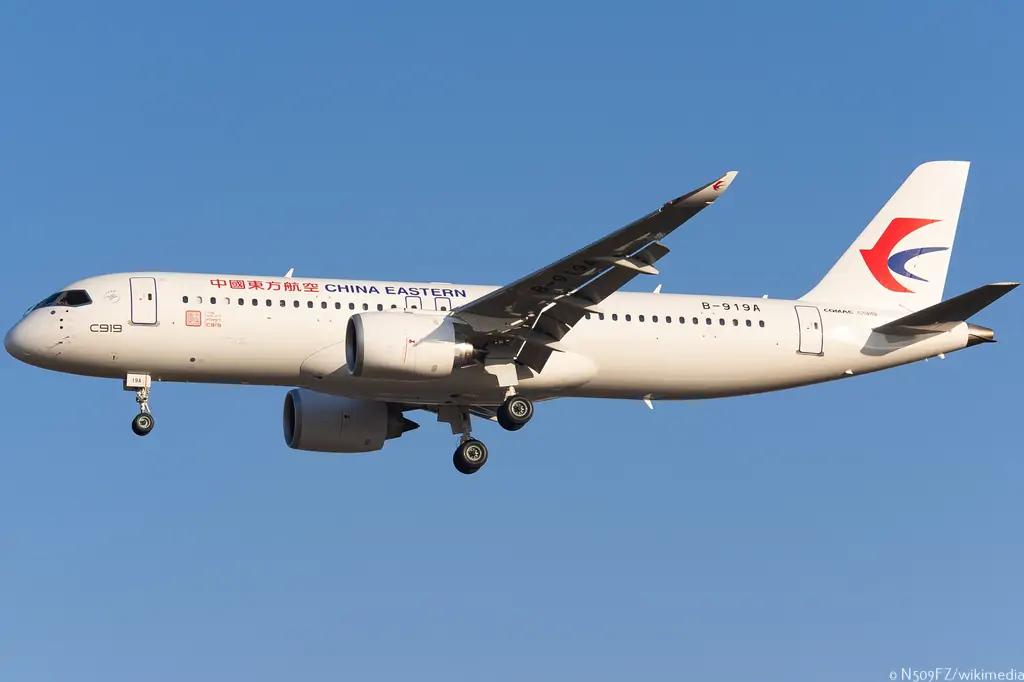
In a groundbreaking move within the aviation industry, China Eastern Airlines announced on Thursday, September 28, 2023, that it will acquire an additional 100 C919 planes, marking the largest-ever order for this aircraft manufactured by the Commercial Aircraft Corporation of China (COMAC). Valued at a staggering $10 billion at list prices, the deal signifies a significant milestone in China's ambitions to challenge industry giants Airbus and Boeing.
Substantial Discount Secured
The state-owned carrier was keen to emphasize that this monumental order came with a substantial discount. Although the C919 boasts a list price of $99 million per unit, it's a well-known practice in the aviation industry to negotiate discounts, which can sometimes reach up to 50%, especially for new variants like these.
Delivery Phases
China Eastern Airlines disclosed that the 100 C919 planes will be delivered in phases over an eight-year period, spanning from 2024 to 2031. This extended delivery schedule aligns with the airline's fleet expansion plans and provides ample time for COMAC to manufacture and deliver these advanced aircraft.
A Shift in the Global Aircraft Manufacturing Landscape
The massive order placed by China Eastern Airlines for 100 C919 planes signifies a notable shift in the global aircraft manufacturing landscape. For decades, Airbus and Boeing have held sway in the industry, with only a few competitors attempting to challenge their dominance. The emergence of COMAC and its C919 is indicative of China's determination to break into this exclusive club. The C919 is positioned as a direct competitor to Airbus SE's A320neo and Boeing Co.'s 737 MAX single-aisle jet families.
The C919 is a technologically advanced single-aisle aircraft designed to meet the demands of modern aviation. It boasts fuel efficiency, state-of-the-art avionics, and a spacious cabin designed for passenger comfort. With China Eastern Airlines' substantial investment in this aircraft, it's clear that they believe in its capabilities and potential to meet the growing demands of air travel in the Asia-Pacific region and beyond.

Navigating Complex Geopolitics
China Eastern's decision to expand its fleet with the C919 also reflects the complexities of geopolitics in the aviation industry. The ongoing trade tensions between China and the United States have had a profound impact on aircraft sales. Boeing, a major player in the global aviation market, has found its sales to Chinese carriers virtually halted since 2017 due to these tensions. This has paved the way for domestic manufacturers like COMAC to gain ground.
As China strengthens its domestic aviation industry, it not only reduces its reliance on foreign aircraft but also positions itself as a formidable competitor in the international market. The purchase of 100 C919 planes by China Eastern Airlines further solidifies this stance and underscores China's commitment to achieving self-sufficiency in aircraft manufacturing.
An Anniversary Deal
According to Li Hanming, an independent aviation industry analyst, this historic deal is particularly significant as it coincides with the one-year anniversary of the C919 receiving its type certificate. Li explained, "COMAC has made a good start in terms of C919 delivery so far. Following that, the plane manufacturer will cooperate more closely with China Eastern to demonstrate the reliability and performance of the C919 to other potential users."
Meeting the Needs of a Post-Pandemic World
The timing of this order is significant. The aviation industry, like many others, faced unprecedented challenges during the COVID-19 pandemic. Airlines worldwide grappled with reduced demand, grounded fleets, and financial strain. However, as the world gradually emerges from the pandemic, air travel is experiencing a resurgence. People are eager to explore the world once more, and airlines are gearing up to meet this pent-up demand.
China Eastern Airlines recognizes the need to modernize its fleet to align with these changing dynamics. The acquisition of 100 C919 planes will allow the airline to offer more efficient, cost-effective, and environmentally friendly options to passengers while remaining competitive in the global market.

A Step Towards Global Recognition
The aviation industry is a global stage where manufacturers, airlines, and countries vie for recognition and influence. China's commitment to building a strong domestic aircraft manufacturing industry is a significant step in this direction. The C919, along with other future projects, could position China as a key player in the aerospace sector.
With the expansion of its fleet with these 100 C919 planes, China Eastern Airlines is not only investing in its own future but also contributing to China's broader ambitions in the global aviation industry. This strategic move exemplifies the airline's vision to be at the forefront of innovation and sustainability in air travel.
Payment Structure
The airline revealed that it plans to pay for these aircraft in installments using a combination of its own funds, bank loans, and bond issuance. This multi-pronged approach reflects China Eastern Airlines' commitment to securing these state-of-the-art aircraft while maintaining financial stability.
A Detailed Delivery Schedule
The delivery schedule for the 100 C919 planes is as follows:
- 5 aircraft will be delivered in 2024.
- 10 aircraft per year from 2025 through 2027.
- 15 C919s will be produced annually from 2028 through 2030.
- The final 20 aircraft will be delivered in 2031.

Conclusion
The historic order for 100 C919 planes by China Eastern Airlines represents a pivotal moment in the evolution of the aviation industry. It demonstrates China's determination to compete on the global stage, the resilience of the aviation sector in the face of challenges, and the readiness of airlines to adapt and grow in a post-pandemic world. As the world watches this transformation, it is clear that the C919 and its impact will extend far beyond China's borders, shaping the future of aviation worldwide.
With Inputs from Reuters
Comment