
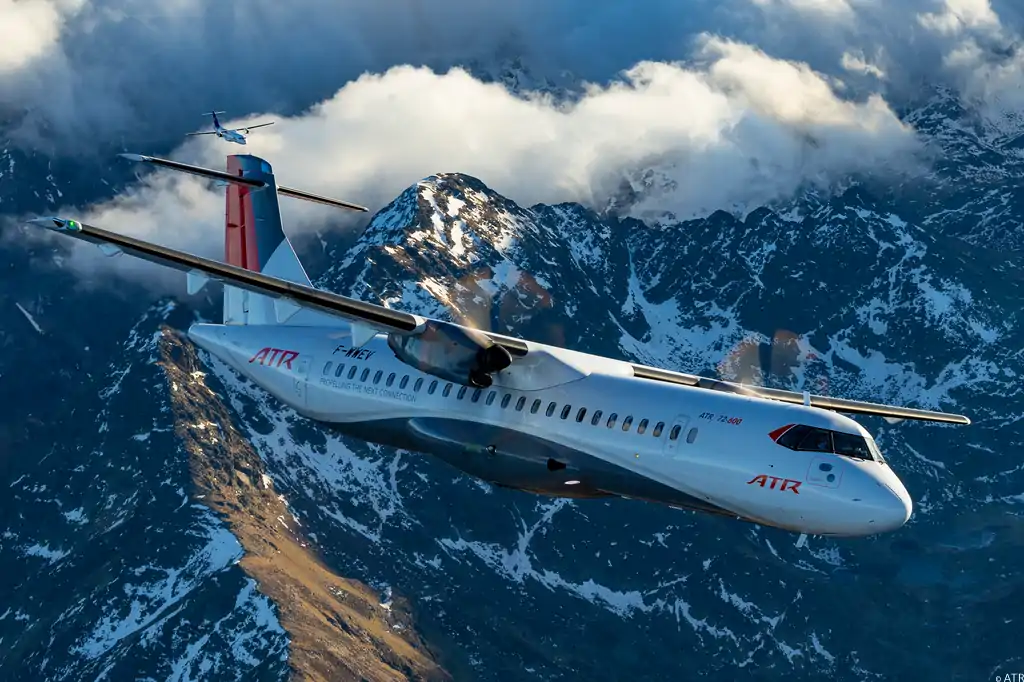
In an exciting development for the Korean aviation industry, ATR, the world's leading regional aircraft manufacturer, has set its sights on expanding its footprint in the country's domestic and short-haul international air transportation markets.
Their ambitious goal is to establish a substantial fleet of 25-30 highly efficient ATR 72 aircraft within the next seven years. This announcement came during a media briefing at the first Gyeongbuk Aerospace, Defense, and Logistics Exhibition (GADLEX), hosted in Gumi from 6th to 8th September. ATR's strategic move is poised to reshape the aviation landscape in Korea.
The ATR Advantage
The ATR 72: A Game-Changer

ATR's aircraft, particularly the ATR 72, have been gaining recognition worldwide for their exceptional performance. The ATR 72's ability to combine fuel efficiency with a spacious cabin and short-field capabilities makes it a game-changer in regional aviation. Its versatility allows airlines to connect even the most remote destinations, offering a unique advantage in markets like Korea, where accessibility is paramount.
Economic Viability
One of the primary reasons behind ATR's popularity is its economic viability. With the rising concern for environmental sustainability and the cost-efficiency of operations, the ATR 72 is designed to meet these demands. Its low fuel consumption and reduced carbon footprint make it an environmentally responsible choice for airlines. Furthermore, the aircraft's operational costs are significantly lower than its competitors, allowing airlines to offer competitive fares without compromising profitability.
The Korean Aviation Landscape
The Need for Regional Connectivity
Korea's domestic and short-haul international air transportation markets have experienced substantial growth in recent years. However, to sustain this growth and cater to the diverse needs of passengers, regional connectivity is vital. ATR's entry into the market addresses this need perfectly. By introducing the ATR 72, Korea can bridge the gap between major cities and remote regions, boosting tourism and economic development in less accessible areas.
Reducing Congestion
Another pressing issue in Korea is airport congestion, particularly at major hubs like Incheon International Airport. ATR's regional aircraft are designed to operate efficiently in congested airspace, offering relief to overburdened airports. Smaller runways can be utilized, reducing delays and improving overall air traffic management.

ATR's Commitment to Korea
Long-Term Vision
ATR's announcement at GADLEX underscores its commitment to Korea. The goal of establishing a fleet of 25-30 ATR 72 aircraft over the next seven years demonstrates a long-term vision to contribute significantly to the Korean aviation industry. This strategic move is a testament to ATR's confidence in the potential of the Korean market.
Local Job Creation
Besides enhancing connectivity and reducing congestion, ATR's presence in Korea will create job opportunities in various sectors, including maintenance, repair, and operations. ATR's commitment to training and developing a skilled workforce will further boost the local economy.
Comments
"We are thrilled to see the Gyeongsangbuk-do provincial government promoting domestic regional aviation by hosting the GADLEX aviation show," says Jean-Pierre Clercin, ATR's Head of Commercial for Asia Pacific. Many domestic airports in Korea are underutilized, and planned domestic flights are mostly north-south. ATR sees possibilities to develop east-west routes, linking communities along the east coast to destinations in Korea's western section, and the ATR is the right platform to make these linkages, given the passenger volume, topography, and distance."
"Furthermore, our 78-seat ATR 72 aircraft can take off and land from a 1,200m runway in both dry and wet circumstances, as required by Korean regulations, such as the one being built on Ulleungdo Island. As a result, our aircraft may contribute to more responsible, economical, and convenient travel alternatives while being profitable while servicing the smallest villages, making it an inclusive and resilient proposition."
Conclusion
ATR's plan to expand its presence in Korea's aviation market is not just a business move; it's a transformational step for the Korean aviation industry. The introduction of the ATR 72 aircraft will enhance regional connectivity, reduce congestion, and stimulate economic growth in remote areas. ATR's commitment to the Korean market is a testament to the company's dedication to innovation and sustainability.
With Inputs from ATR

Read next

In a groundbreaking development amidst the chaos and uncertainty following the Ukraine invasion, the world's largest aircraft lessor, AerCap, has successfully resolved a protracted insurance dispute. This dispute arose due to Russia's reluctance to repatriate 17 aircraft leased to Aeroflot, a state-controlled airline, and its subsidiary Rossiya.
The Background
Before delving into the details of this historic settlement, it is essential to understand the context that led to this protracted dispute. The crisis began when Russia's actions in Ukraine triggered international sanctions and diplomatic turmoil. Amid this turbulence, several Western companies found themselves facing unprecedented challenges, with their assets trapped within the borders of Russia and its allies.
The Dispute Unveiled
AerCap, a behemoth in the aircraft leasing industry, found itself entangled in a complex web of disputes with Russia. The heart of the matter lay in the 17 aircraft and five spare engines leased to Aeroflot and Rossiya. These assets were stranded in Russia, rendering them inaccessible for their intended purposes. The global aerospace industry closely monitored this situation as it underscored the broader issues faced by Western companies operating in Russia.

Legal Battles and Diplomatic Efforts
As the situation escalated, AerCap initiated legal proceedings and sought diplomatic channels to resolve the matter. The dispute dragged on for months, leading to uncertainty over the fate of these valuable assets. This prolonged standoff took a toll on AerCap's financial health and raised questions about the feasibility of operating in regions fraught with geopolitical risks.
The Watershed Moment
The breakthrough moment finally arrived when AerCap reached an agreement with NSK, an insurance company that had underwritten policies related to these assets. The $645 million settlement represents not just a significant financial relief for AerCap but also a symbolic turning point in the ongoing disputes involving Western companies and Russia. The jets would now be owned by Russian state-owned NSK.
"We have released our claims against NSK, Aeroflot, Rossiya, and their international reinsurers with respect to these aircraft and engines," stated AerCap, whose shares were up almost 5% in premarket trade.
The Implications
The settlement's implications are far-reaching. It sets a precedent for other Western companies entangled in similar disputes with Russia, offering a glimmer of hope for the resolution of their challenges. Additionally, it highlights the critical role that insurance companies can play in mitigating risks associated with global operations.

Aeroflot’s Response
Following the settlement with AerCap, Aeroflot announced in a statement that ownership of 18 aircraft and five engines had been transferred to NSK. It was unclear why the number of planes changed by one from AerCap's announcement.
"AerCap has terminated its claims against Russian parties under both insurance policies issued by Russian insurance companies and leasing agreements," Aeroflot said, adding that it is in negotiations with other lessors about resolving claims.
Looking Ahead
As the world watches this landmark settlement, questions abound regarding the future of the remaining 400 Western planes still stuck in Russia and Ukraine. The outcome of these cases will likely be influenced by the resolution of this AerCap-NSK agreement. Companies and investors are anxiously awaiting further developments to gauge the evolving dynamics of doing business in this tumultuous region.
Conclusion
In the midst of geopolitical turbulence, AerCap's successful insurance claim settlement serves as a testament to the power of perseverance and strategic negotiation. This resolution not only bolsters the company's financial position but also provides hope for a resolution to similar disputes involving Western companies operating in Russia. As the situation continues to unfold, the global business community will be closely watching the fate of the remaining 400 Western planes, hoping for a smoother path forward.
With Inputs from Reuters
Read next
FlyArystan to Commence Flights to New Delhi to Expand International Network

Radhika Bansal
06 Sep 2023
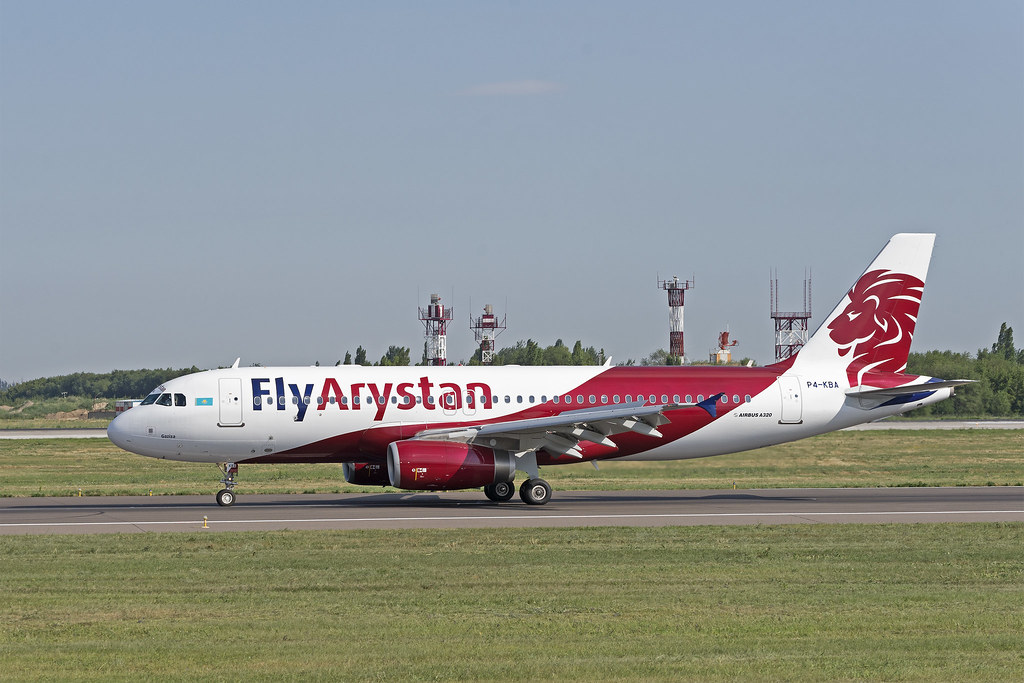
FlyArystan, the low-cost subsidiary of Kazakhstan’s flag carrier Air Astana, is expanding its international network with the launch of a new route between Almaty (ALA) and New Delhi (DEL) scheduled to commence in late September. This marks the airline’s second service to India, with flights from Shymkent to New Delhi having been launched in May 2023. Flight KC7469 departs Shymkent International Airport (CIT) at 08:30 and arrives at New Delhi Indira Gandhi International (DEL) at 10:55 after a 2:55 hour flight.
The Kazakh airline will be competing on this route with Indian low-cost carrier IndiGo, which is starting its own thrice-weekly service between the two cities on September 23, 2023.
In the last few years, Kazakhstan and Central Asia have seen the establishment of new direct air routes, operated by narrow-body aircraft, towards destinations in the Middle East, the Caucasus, and South Asia. Since its launch in 2019, FlyArystan has already expanded to markets outside its home country and currently flies to Azerbaijan, Georgia, Turkey, China, Qatar, UAE, Uzbekistan, Kyrgyzstan, and Tajikistan.
The recent launch announcement is likely to be followed by others since FlyArystan also stated that it is evaluating the launch of new international services to Abu Dhabi (AUH), as well as to destinations in Oman and Saudi Arabia.
Peter Foster, President and CEO of Air Astana Group, said: “The launch of FlyArystan in May 2019 has proven to be a tremendous success for Air Astana Group in pioneering the rapid development of low-cost markets in Kazakhstan and Central Asia. Dramatic growth in demand from a completely new segment of passengers in these markets is being followed by an exciting new phase of international network expansion, with the launch of services to cities in dynamic India and Central Asia markets, plus others in the Middle East on the horizon.”
About FlyArystan
According to fleet data from ch-aviation.com, Air Astana has a fleet of 46 aircraft, which includes types from Airbus, Boeing and Embraer. The listing shows 11 Airbus A320-200s, 11 A320neos, two A321-200s, four A321neos and ten A321LRs. Added to that are three Boeing 767-300ERs and five Embraer E190s. It plans to add two more Airbus A320neo aircraft to its fleet by the end of 2023 to support its ambitious international network expansion.
FlyArystan is a low-cost airline based in Almaty, Kazakhstan. It is the first LCC in central Asia. The company slogan is Say YES! to Travel. It is the wholly-owned low-cost subsidiary of Air Astana. The carrier was founded on 2 November 2018 and commenced operations on 29 March 2019. Its main hubs are Almaty International Airport, Nursultan Nazarbayev International Airport, Atyrau International Airport, Shymkent International Airport, and Sary-Arka Airport. The airline flies to over 30 destinations in Kazakhstan, Kyrgyzstan, Uzbekistan, Turkey, Georgia, India, Azerbaijan, and China.
Since commencing operations in 2018, the low-cost airline has gone from strength to strength. 2022 was a particularly strong one for the airline, in which it flew three million passengers on over 20,000 flights. It flew 6% more passengers last year than it did in 2021 and also has an average load factor of 87%.
Read next
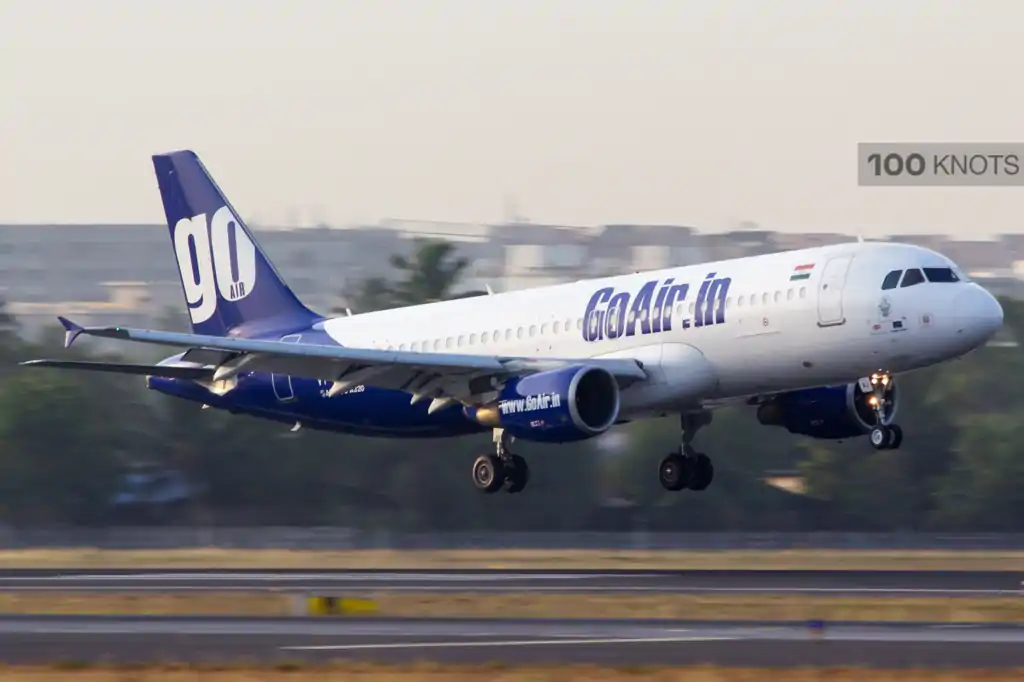
In a legal twist that has captured the attention of aviation enthusiasts and legal experts alike, an Irish lessor has made a fervent appeal to India's insolvent Go First airline. The plea revolves around the restoration of "robbed" components from its leased airplanes and the implementation of round-the-clock security to monitor grounded aircraft. This request marks the latest escalation in the firm's tireless efforts to regain control of its Airbus planes, raising intriguing questions about the intricacies of aircraft leasing, security, and accountability within the aviation industry.
The Mysterious Disappearance
The drama began when ACG Aircraft Leasing, an Irish aircraft leasing company, made a startling discovery. Vital components, crucial for the safe operation of commercial aircraft, were found to be missing from at least two of the four planes it had leased to Go First. These missing components were more than just replaceable parts; they were the lifeblood of the aircraft, essential for safe and efficient flights. Lessors have so far been unsuccessful in arguing in Indian courts to get their planes back, despite expressing concerns about aircraft cannibalization.
The Legal Battle Takes Flight
ACG Aircraft Leasing wasted no time in bringing the matter to the fore. The Irish lessor took its case to the Delhi High Court, where the details of the missing components and their potential implications were laid bare in a non-public court file on September 1. The court document outlined ACG's concerns about the missing components and their potential impact on the leased aircraft's airworthiness and safety.
Planes are "akin to perishable goods," and if not properly preserved, "they disintegrate at a rapid pace, causing huge irreparable loss," stated ACG's 140-page filing.
The High-Stakes Request
At the heart of ACG Aircraft Leasing's plea is a request for the restoration of the missing components. The lessor contends that these parts were unlawfully removed or misplaced during Go First's operation and maintenance of the aircraft. To address this issue, ACG is urging the court to compel Go First to take immediate action to locate, replace, or return these critical components. The court has yet to rule on ACG's plea, and the matter will be heard again on September 13.

Security on High Alert
In a bid to prevent any further incidents of missing components or potential tampering, ACG Aircraft Leasing is also requesting the implementation of round-the-clock security measures for the grounded aircraft. This entails not only ensuring the physical safety of the planes but also closely monitoring anyone who comes into contact with them.
The Significance of 24/7 Surveillance
The round-the-clock security measures underscore the seriousness of the situation. Aircraft are highly complex machines, and any unauthorized interference or tampering can have catastrophic consequences. ACG's request for constant surveillance aims to restore confidence in the safety and integrity of its leased aircraft.
Go First's Response
Lessors can currently only check Go aircraft on an as-needed basis. The lessor requested a "robbery list" on August 24, but Go responded that there were no court orders requiring such paperwork, according to court documents.
According to court papers, ACG has requested the Delhi judge to enable it to "contract 24-hour security for all its aircraft" and "replace all components stolen from the aircraft."
As of the latest developments, Go First has not publicly commented on the matter. It remains to be seen how the airline will respond to the Irish lessor's appeal and the court's decision.
Conclusion
The case of ACG Aircraft Leasing's missing components raises important questions about the responsibilities of lessees in the aviation industry. Ensuring the safety and airworthiness of leased aircraft is paramount, and any lapses in this regard can lead to legal battles, reputational damage, and financial implications.
In an industry where precision and accountability are vital, this case serves as a stark reminder of the challenges that lessors and lessees can face. It also highlights the need for robust security measures to protect valuable assets like commercial aircraft.
With Inputs from Reuters
Read next
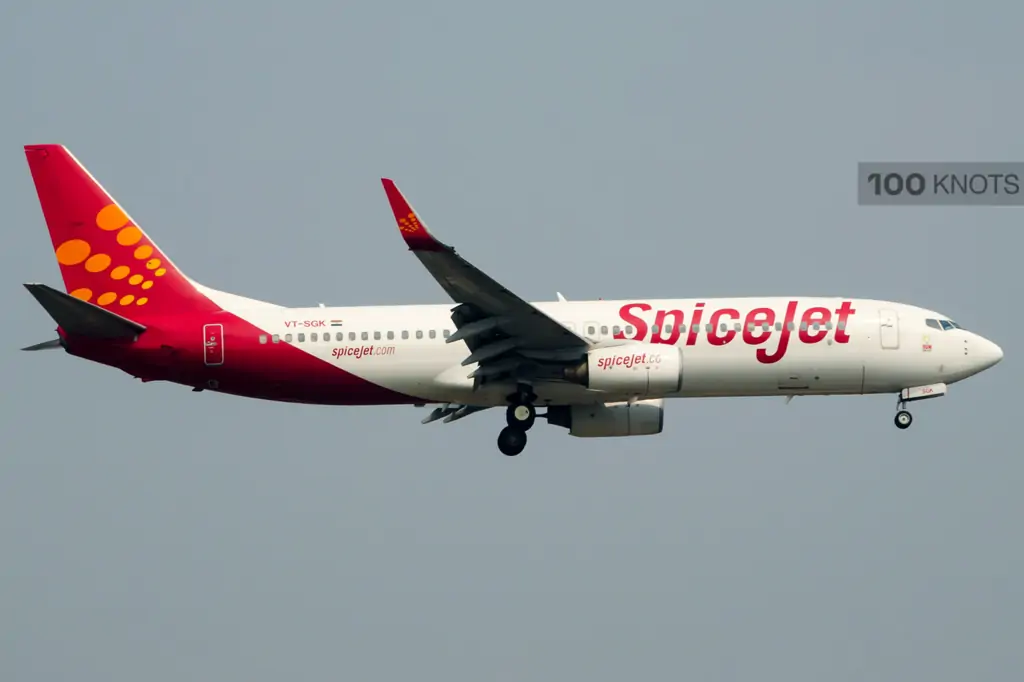
The National Company Law Tribunal (NCLT) on Tuesday, September 5 suggested that SpiceJet settle the issues with lessors that have sought initiation of insolvency proceedings against it. The tribunal's suggestion came against the backdrop of the crisis-hit carrier issuing shares instead of dues to nine aircraft lessors.
On Tuesday, September 5, the NCLT was hearing a plea filed by Celestial Aviation Services Ltd, an operational creditor that had filed a plea to initiate insolvency proceedings against the airline. A two-member NCLT bench observed that the airline is settling with some of the aircraft lessors by converting debt into equity. "SpiceJet seems to be settling with other lessors by giving shares, Why don't you settle with these lessors as well?," the bench, comprising M M Khandelwal and Rahul Prasad Bhatnagar, said.
This was about Celestial Aviation Services and four other lessors who have filed pleas against the airline. Further, the bench said that in its opinion, it is in its best interest to settle with the lessors and suggested that all of them sit together and resolve the disputes. The tribunal also observed that "banks have not filed insolvency petitions, only lessors have come".
On Monday, September 4, SpiceJet announced the allotment of 4.81 crore equity shares on a preferential basis to nine of its aircraft lessors to clear outstanding dues of INR 231 crore. The allotment committee of the board of directors of the company passed several resolutions, including an INR 2,500 crore fundraiser and a preferential issue of shares to lessors at an issue price of INR 48 each to clear its outstanding dues, the low-fare airline said in a stock exchange filing.
Story so far
In June 2023, SpiceJet entered into a settlement agreement with Nordic Aviation Capital (NAC), a major lessor for the airline's Q400 aircraft. It was earlier reported that the airline planned to settle its dues of Rs 2500 crore by transferring its cargo undertaking to a newly created subsidiary, SpiceXpress. It will then issue compulsorily convertible debentures (CCDs) to the parent. Then SpiceJet will offer lessors the option to swap lease payments with the CCDs.
Celestial's is the fifth insolvency plea against SpiceJet. Pleas by lessors such as Willis Lease Finance, Aircastle and Wilmington are already pending at the NCLT. All the petitions are likely to come up for hearing on September 15.
The NCLT on May 8 issued notice in Aircastle's first plea and sought the airline's response. SpiceJet had accordingly filed a response to the plea, and Aircastle sought a short adjournment on May 25 to respond to the airline's reply. Subsequently, SpiceJet filed an application questioning the maintainability of Aircastle's insolvency plea. SpiceJet has also questioned the maintainability of Aircastle's second insolvency plea and Wilmington's plea.
The NCLT is scheduled to hear the pleas of all SpiceJet lessors on September 15, 2023. According to regulatory filings -- nine lessors who have been allotted shares include SASOF III (A13) Aviation Ireland DAC, SASOF III (A6) Aviation Ireland DAC, SASOF III (C) Aviation Ireland DAC, SASOF III (E) Aviation Ireland DAC, SASOF III (A19) Aviation Ireland DAC, SASOF II (J) Aviation Ireland DAC Citrine Aircraft Leasing Limited, Fly Aircraft Holdings Seven Limited, Fly Aircraft Holdings One Limited.
Not the end of the problem
The fund crunch and grounded fleet have eroded SpiceJet's market share to 4.2% as of July, lower than that of new entrant Akasa, which only began commercial operations in August 2022. SpiceJet, which in February converted around USD 100 million in dues to aircraft lessor Carlyle Aviation into equity and debentures, still finds itself in legal battles with other lessors over dues. The airline is also embroiled in legal disputes as the Delhi High Court has also ordered SpiceJet to pay former owner Kalanithi Maran INR 100 crore. This has to be done by September 10 to repay a debt. The total sum owed by SpiceJet to Maran is INR 397 crore. On September 11, the High Court is expected to render a decision on the matter.
Read next
Delhi Airport Fully Prepared for G20 Summit; Airlines Offer One-Time Waiver on Tickets Amid Travel Restrictions
Radhika Bansal
06 Sep 2023

Ahead of the G20 Summit, Tata-owned Air India offered a one-time waiver of applicable charges, if the passengers holding tickets from September 7 to 11 wish to change the date of travel or the flight, the airline posted on X (previously Twitter) on Tuesday, September 5. "There will be travel restrictions in Delhi between 7th and 11th September 2023. As a measure of goodwill, passengers holding confirmed tickets to fly to or from Delhi on these dates are being offered a one-time waiver of applicable charges, if they wish to change their date of travel or their flight," Air India said on X, formerly Twitter. Only the fare difference for the rescheduled flight, if any, would be applicable, it added.
"We have cancelled selected flights while some others have been rescheduled," Vistara also said in a post on platform X (previously Twitter) on Tuesday, September 5. The airline said that it was offering a waiver of the change fee for one-time rescheduling for bookings on these dates. "We are also assisting the impacted customers with rescheduling or refunds, as applicable," it added. The full-service carrier has also requested customers scheduled to travel between September 8-11 are requested to check its website for their flight status in advance to avoid any inconvenience.
In a post on X (previously Twitter), SpiceJet said the G20 Summit in Delhi may cause road closures and diversions, leading to longer travel times than usual. "All passengers are requested to ensure a timely arrival at the airport for their SpiceJet flight. Check-in counters close 60 minutes before departure," it added.
Preparation by Delhi Airport
The government has asked airlines to cancel up to 25% of flights on specific hours on 8 and 11 September as it intends to keep airspace and terminals free of congestion. Flights will have to be reduced from 12 p.m. to 12 a.m. on September 8 and from 6 p.m. on September 10 until 12 p.m. the next day, as most of the delegates will fly in and out during these hours. Air India has waived off cancellation charges for people travelling between 7-11 September.
One of the officials said that around 120 flights are likely to be impacted during the September 8-10 period. The Indira Gandhi International Airport (IGIA), operated by DIAL, in the national capital is the country's largest airport and handles around 1,300 flights daily. On August 26, DIAL said it had received requests from airlines for cancellation of 80 departing and as many arriving domestic flights during three days from September 8.
Preparations at the Delhi Airport From preparing ceremonial lounges to keeping airspace and terminals free of congestion, India’s largest airport Delhi is gearing up for the upcoming G20 summit. The summit which will see the presence of 19 heads of state will see the arrival of 50 VVIP jets. Sources said that three ceremonial lounges have been prepared to receive the heads of State.
Government officials said that teams of officials accompanying the leaders will be able to complete the formalities at these lounges and exit the airport from the technical area without affecting the movement of regular passengers. “The VIPs will land at the technical airport but aircraft and private jets carrying them will be parked at the Delhi airport. Special arrangements have been made to park the Air Force One and a few other important aircraft at the Palam Air Force Station,” said a government official.
The skies around Pragati Maidan, which will host the summit, will be kept secure as operations of flying objects like airborne video cameras or drone cameras or flying drones are not permitted within a radius of 5 km around the venue. The airport has been decked up with fountains, sculptures and logos of G20 as the GMR group-led operator has formed special teams to monitor arrivals and departures.
Delhi, which is India’s largest airport, has around 220 parking stands, but all are utilised due to the surge in air traffic. The situation is worsening due to 50 aircraft that are grounded at the airport due to issues with engines and the bankruptcy of Go First. The Air Traffic Control (ATC) which is operated by the Airport Authority of India issued instructions on Tuesday, September 5 which said that charter aircraft and business jets will not be allowed to land or take off.
Safdarjung Airport will remain closed during this time, except for the IAF helicopters which may be deployed on emergency Or VVIP duties, and military helicopters utilized by the National Security Guard (NSG) providing immediate backup support. ATC officials said that there could be multiple diversions as VVIP flights will be given priority for landing. Similarly, operations of hang gliders, paragliders, paramotors, aero-models, all types of drones and similar short-range aerial vehicles are not permitted within 100 km around Delhi.
Traffic Diversions
Meanwhile, security has also been enhanced in the national capital, while traffic regulations are in place for the G20 summit on September 9 and 10. For passengers planning to travel to the airport during the Summit, the Delhi traffic police have suggested utilising Metro services, particularly the Airport Express Line that connects New Delhi Station to Dwarka Sector 21 Station via IGI Airport Terminal-3.
As per traffic advisory, people coming from Dwarka to T3 can take the Blue Line to Dwarka Sector 21 Station and then switch to the Airport Express Line to reach IGI Airport T3. From New Delhi to T3, passengers can utilise the Yellow Line to reach the New Delhi Station, then transfer to the Airport Express Line for IGI Airport T3. They can, alternatively, take the Orange Line from Shivaji Stadium to IGI Airport T3.
A senior traffic police official told IANS that road journeys to IGI Airport will be affected from midnight on September 7 to 10.59 p.m. on September 10. "Passengers choosing to travel by road are advised to allow for sufficient travel time and follow these recommended routes," the official said.
US President Joe Biden, French President Emmanuel Macron, Australian Prime Minister Anthony Albanese, German Chancellor Olaf Scholz, UK Prime Minister Rishi Sunak, Japanese Prime Minister Fumio Kishida and Brazilian President Luiz Inacio Lula da Silva are among the G20 leaders who have already confirmed their participation in the G20 Summit. The G20 member countries represent around 85% of the global GDP, over 75% of the global trade, and about two-thirds of the world population. The grouping comprises Argentina, Australia, Brazil, Canada, China, France, Germany, India, Indonesia, Italy, Japan, the Republic of Korea, Mexico, Russia, Saudi Arabia, South Africa, Turkey, the UK, the US and the European Union.
Comment