
Airlines to Save Around INR 150-180 Crore Annually by Using Delhi Airport's Eastern Cross Taxiway

Radhika Bansal
11 Dec 2023
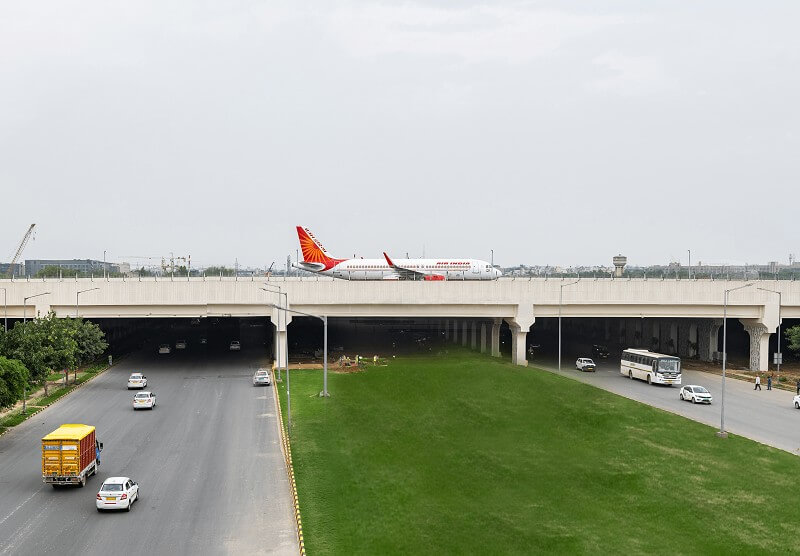
Airlines are likely to save around INR 150-180 crore annually by using the Delhi airport's Eastern Cross Taxiways that help reduce taxiing time as well as fuel consumption by aircraft, according to a top official.
The Indira Gandhi International Airport (IGIA) in the national capital, operated by DIAL (Delhi International Airport Ltd), handles up to 1,500 aircraft movements daily.
In a recent interview, DIAL CEO Videh Kumar Jaipuriar said assuming 10-15% of aircraft use the Eastern Cross Taxiways (ECT), it is expected that there would be savings of around 55,000 tonnes of carbon dioxide. There can be savings of INR 150 to INR 180 crore for airlines by using the ECT, he said.
The ECT, which is 2.1 km long and can accommodate wide-body aircraft, will reduce the time spent on the tarmac by passengers after landing and before take-off of their flights. It was inaugurated on July 14. Delhi Airport became the first airport in India to have four operational runways. The 4th Runway also would help reduce Carbon emissions significantly.
Citing back-of-the-envelope calculations, Jaipuriar said DIAL has estimated how many aircraft will be using the ECT and how much travel time will be reduced.
"Each litre of ATF produces 2.5-3 kg of carbon dioxide. If we are talking about saving 55,000 tonnes of carbon dioxide, you divide it by 3 and that means around 18,000 tonnes of ATF." "Each tonne of ATF costs Rs 1 lakh and it is Rs 100 per litre… savings for airlines because of lower taxiing time is expected to be around INR 150-180 crore," he said.
On average, Jaipuriar said 7-8 minutes of taxiing time is saved for an aircraft that lands in the north and comes to the south through the ECT. As per DIAL, the ECT is estimated to save around 350 kg of fuel every time an aircraft taxis through the runway from RW 29R to Terminal 1 and vice-versa.
"This translates into a reduction of nearly 1,114 kilograms of CO2 emissions for each aircraft taxiing along this route. On an annual basis, the ECT is estimated to reduce emissions of approximately 55,000 tonnes of CO2 from aircraft," it said in July this year.
DIAL had also said 55,000 tonnes of CO2 emission is equivalent to planting about 15 lakh trees.
The ECT connects the northern and southern airfields on the eastern side of the airport and will reduce the taxiing distance for an aircraft by 7 kilometres. The distance an aircraft needs to cover after landing on the third runway and going to Terminal 1 (T1) will be reduced to 2 kilometres from 9 kilometres now.
The dual-lane ECT can handle wide-body aircraft, including A380, B777 and B747. Each lane is 44 metres wide with a gap of 47 metres between them to allow simultaneous passage of two aircraft.
Busiest Airport in India
Civil Aviation Minister Jyotiraditya Scindia stated earlier that IGIA can soon become the world's largest airport with the ongoing expansion of the airport. It can even surpass Atlanta Airport in terms of passenger capacity and become one of the world's biggest airports.
"The Delhi airport caters to 70 million passengers, which will likely go to 109 million by the end of this year. It is the only Indian airport with three runways, and the fourth one will likely become operational in September," Scindia added.
DIAL (Delhi International Airport Limited), a joint venture majority-owned by the GMR Group, had in 2019 announced an investment of INR 9,800 crore to upgrade the existing Terminal 1, build a fourth runway and for other development works to increase the airport's capacity to 100 million passengers a year from 66 million now.
In 2016, Delhi Airport ranked 9th among the world's ten busiest airports, as it handles 5.9 crore people annually. Meanwhile, the IGI Airport was recently named among the world’s 10 busiest airports by passengers handled. As per the Airports Council International (ACI), Delhi Airport ranked at the ninth spot for 2022, ahead of Paris’s Charles de Gaulle Airport. The Delhi airport is India’s largest and is the only airport from South and Southeast Asia to feature in ACI’s list of the 10 busiest airports. As per ACI data, the Delhi airport handled almost 5.95 crore passengers in 2022. The airport was ranked as the 13th busiest for 2021 and 17th busiest for 2019.
Read next
DGCA Plans to Release a New Framework on Gender Equality in Indian Aviation
Radhika Bansal
11 Dec 2023

The Directorate General of Civil Aviation (DGCA) plans to come out with a framework early next year on what could be done to address gender issues, a top official said on Saturday, December 9. Speaking at an event in New Delhi, DGCA chief Vikram Dev Dutt said the issue of gender has been debated at the regulator informally.
"Systemically, when we as a regulator when we look within it... we thought we would show the mirror to ourselves as an organisation... early next year... we will come out with a framework for DGCA in terms of what we would do for gender, beyond paper and official circulars," he said. Specific details about the proposed framework could not be immediately ascertained.
Dutt also mentioned DGCA's larger role in influencing positive change within the private sector and sought stakeholder suggestions. Minister of State for Civil Aviation V K Singh said the tremendous growth story in Indian aviation is synonymous with the vision, inspiration, and strength embodied by women in this field. Women are incredible force multipliers, shaping the ever-expanding horizons of our aviation landscape.
According to the order, this committee will issue its report by February next year. The committee’s formation aligns with the International Civil Aviation Organization’s commitment to fostering women’s participation and striving to attain a balanced representation of 50-50 (women-men) by 2030 at all professional and higher levels of employment within the global aviation sector.
Underscoring DGCA's larger role in influencing positive change within the private sector, Dutt welcomed collaboration and suggestions from the aviation community. "Breaking new ground requires taking the right steps, and we are open to navigating uncharted territory with collective input," he concluded.
This strategic initiative by DGCA signals a significant stride towards gender inclusivity in Indian aviation. The regulator is poised to lead by example, implementing substantive measures to reshape the industry's landscape.
The DGCA has formed a four-member committee to provide suggestions for achieving gender equality in the aviation sector. The committee represents a significant step towards fostering gender equality within the Indian aviation sector.
Need for Diversity in Indian Aviation
They were speaking at the 'Women in Aviation' event. The Chief Guest, Gen (Dr) VK Singh (retd), Union Minister of State, Ministry of Civil Aviation and Ministry of Road, Transport and Highways, while addressing the gathering at the event, applauded the efforts of women in the aviation sector.
"In the aviation sector, we boast of one of the highest number of female pilots globally. The Women in Aviation India booklet released today underscores the diverse roles women can play in the aviation sector. In our evolving world, it's crucial to inspire more women. By uniting efforts in both government and private sectors, we can pave the way for increased inclusivity. As we celebrate the achievements of women in aviation, let's persist in reducing the gender gap. Congratulations to all the women who are winning the awards today and motivating women across the globe to take the highest position in whichever industry they are," said VK Singh.
India has the highest percentage of women pilots globally at 15%. However, it's still important to prioritize the inclusion of women.
Acknowledging achievements such as 15% of women pilots and a rising percentage of women in aviation and hospitality, Radha Bhatia, President of Women in Aviation India, called for stakeholder unity. She emphasised the need to support education and training for girls aspiring to enter the industry amid India's ascent as a major global aviation market.
Read next
SpiceJet Nears Financial Resurgence as Big Investors Plan to Inject Over Rs 1,000 Crore

Abhishek Nayar
11 Dec 2023
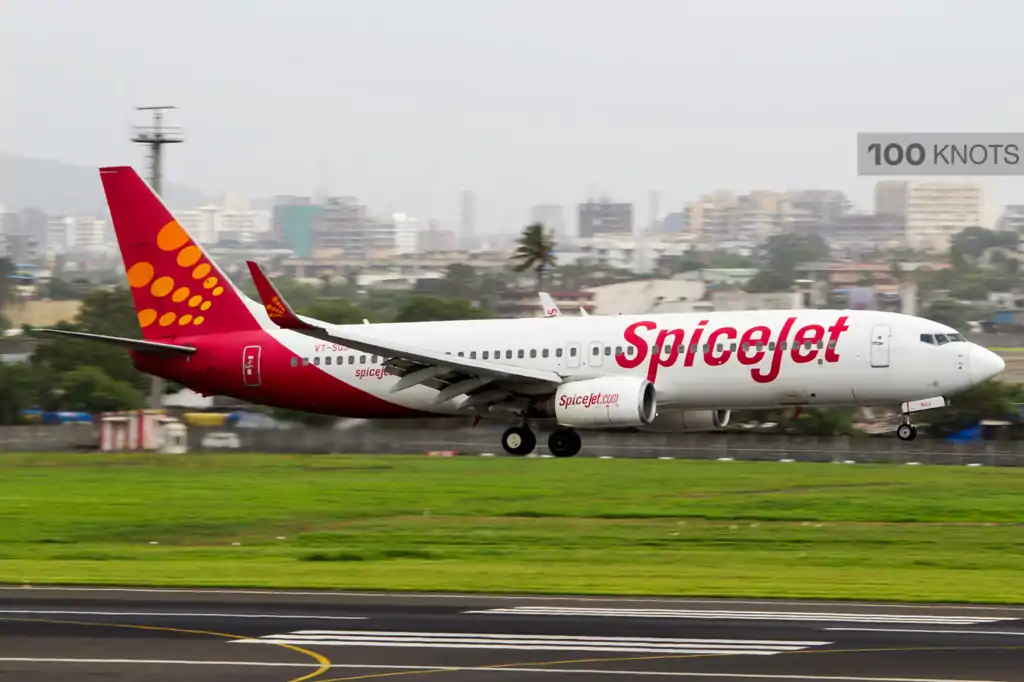
In a significant turn of events, Ajay Singh's SpiceJet, which has been grappling with a severe cash crunch, is on the verge of securing a much-needed financial lifeline. The struggling airline is set to receive investments totaling over Rs 1,000 crore from two major investors. The Board of SpiceJet is scheduled to meet on Monday, December 11, 2023, to discuss and consider various options for raising fresh capital, including issuing equity shares and convertible securities on a preferential basis.
Investor Infusion
According to reliable sources, two substantial investors are gearing up to inject funds into SpiceJet. One of the investors is anticipated to contribute around Rs 1,000-1,200 crore, while the other is expected to invest up to Rs 300 crore. This development follows the airline's recent communication to the BSE stock exchange, where it outlined its plans for capital infusion.
Stock Market Reaction
The news of potential investments has already had a positive impact on SpiceJet's stock performance. In the past week alone, the airline's stock price has surged by nearly 18%, signaling renewed investor confidence in the company's financial prospects.
Challenges and Court Cases
SpiceJet has been facing a myriad of challenges, including a cash crunch that has led to only a portion of its fleet being operational. The need for funds has become increasingly urgent as creditors intensify pressure on the airline. Previous attempts to secure funding were unsuccessful due to a lack of investor interest.
The airline is currently entangled in multiple court cases related to outstanding debts owed to various entities, including Maran, financial services firm Credit Suisse, and lessors. These legal challenges have added to the financial woes of the airline, which reported a net loss of Rs 1,513 crore in the fiscal year 2022-23 and Rs 1,744 crore in 2021-22.
Recent Legal Developments
SpiceJet faced a setback when one of its aircraft was seized and grounded in Dubai due to litigation. However, in a recent hearing at the Dubai International Financial Centre (DIFC) Court on December 7, the order for seizure was discharged in favor of SpiceJet. Notably, the judge directed an inquiry into the losses suffered by SpiceJet as a result of the order and ordered the airline to pay legal costs incurred during the process.
Financial Performance
Despite the challenges, SpiceJet managed to achieve a net profit of Rs 197.6 crore in the first quarter of the current fiscal year, providing a glimmer of hope for the airline's financial recovery.
Conclusion
As SpiceJet's board convenes to deliberate on fundraising options, the potential infusion of over Rs 1,000 crore from significant investors marks a crucial turning point for the beleaguered airline. If successful, this financial injection could not only alleviate the immediate cash crunch but also position SpiceJet on a path towards recovery. The airline's ability to navigate legal challenges and attract investor confidence will be closely watched in the coming weeks, shaping the trajectory of its future in the aviation industry.
Read next

Air travel is a complex symphony of engineering marvels, and one often-overlooked contributor to the seamless operation of an aircraft is the Auxiliary Power Unit (APU). As passengers board an aircraft, especially through the rear door on the tarmac, they may be greeted by the unmistakable sound of an engine running in the tail section. This sound emanates from the APU, a small but crucial gas turbine engine designed to provide electrical power and high-pressure air in various scenarios.
What is an APU?

The APU, or Auxiliary Power Unit, is a self-contained gas turbine engine typically located in the tail section of an aircraft. Despite its small size, the APU plays a pivotal role in ensuring the functionality of critical systems when the main engines are not in operation. This includes providing electrical power for lighting, emergency hydraulics, climate control, and even starting the main engines. The APU is structurally similar to a regular jet engine but lacks the external cowling. Its intake and exhaust are strategically positioned to optimize functionality.

APU Operations

The APU operates autonomously, initiated by a simple switch command from the pilot. It can start automatically, taking approximately 2 minutes, and can function up to the maximum certified altitude of the aircraft. Fuel for the APU is drawn from the aircraft's main tanks, consuming around 15 gallons or 60 kg per hour. An Electronic Control Unit (ECU) oversees APU operations, ensuring safety by monitoring various parameters such as overspeed conditions, oil pressure, temperature, and potential system faults.
Multiple Functions
The APU serves a multifaceted purpose beyond generating electrical power. It doubles as an air conditioner by providing cooled air to the aircraft's climate control system. While some may speculate about additional thrust, the APU, unfortunately, cannot contribute thrust to propel the aircraft forward. Its significance becomes apparent during ground operations, such as temporary airport closures, where the APU sustains essential systems, keeping passengers comfortable during unforeseen delays.
Cabin Pressurization

One of the critical roles of the APU is maintaining cabin pressurization. By supplying bleed air to the aircraft's systems, including the air conditioning packs, the APU ensures that the cabin pressure remains at a level conducive to human comfort and safety. This becomes especially important during takeoff, where the APU can assist in powering the air conditioning packs to enhance engine performance.
Main Engine Starting
The APU plays a pivotal role in initiating the main engines without relying on external ground equipment. It provides the necessary electrical power and high-pressure air for engine starting, eliminating the need for complex ground infrastructure. This proves particularly beneficial in remote airports where comprehensive ground handling facilities may be lacking.
Emergencies and Redundancy

In emergency situations, the APU becomes a lifeline for the aircraft. It serves as an alternate power source during electrical failures, and in the event of a double-engine failure, it becomes crucial for both electrical power and air conditioning/pressurization. The APU's contribution extends to hydraulic systems, where it provides power to emergency hydraulic pumps in case of a hydraulic failure.
Do All Airplanes Have An APU?
While APUs are commonly found in large airplanes, helicopters, and business jets, they are not mandatory for an aircraft to depart. Smaller aircraft often rely on alternate means for engine starting and electrical power. Despite its non-mandatory status, a non-functional APU can pose operational challenges, leading to increased workload and potential delays.
Conclusion
In the intricate dance of aviation technology, the Auxiliary Power Unit emerges as a silent hero, ensuring the seamless functioning of an aircraft's critical systems. From providing electrical power and air conditioning to facilitating engine starts and serving as a contingency in emergencies, the APU's significance cannot be overstated. As technology continues to evolve, the role of the APU remains integral to the safety and efficiency of air travel.
With Inputs from Pilot Teacher
Read next
China Eastern Airlines Receives Third C919 Aircraft as Part of Landmark Deal with COMAC
Abhishek Nayar
11 Dec 2023
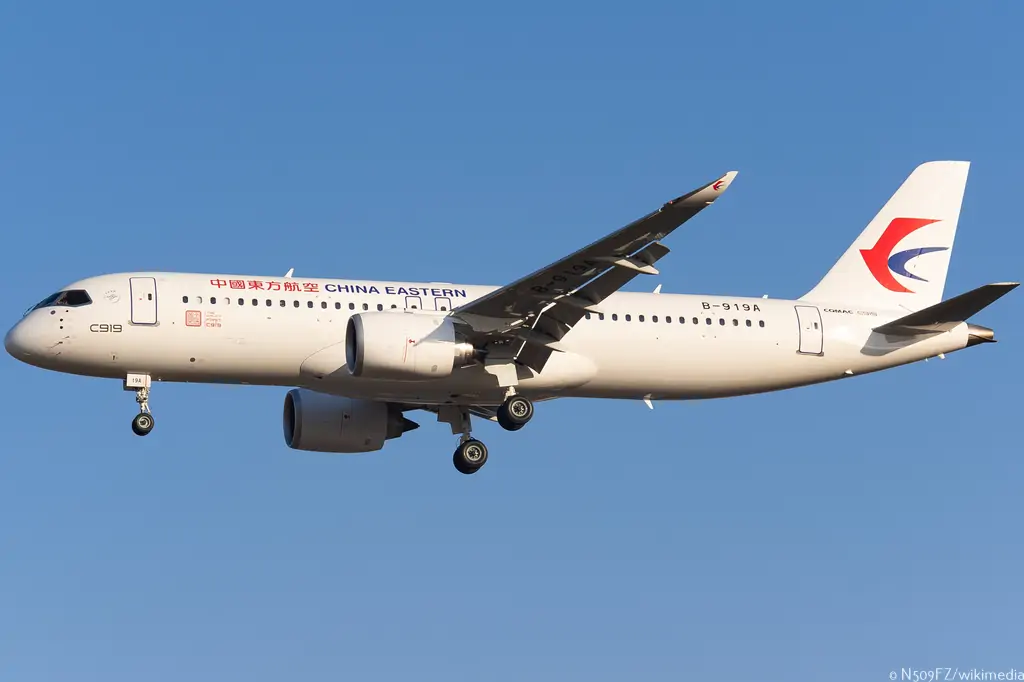
China Eastern Airlines has recently taken delivery of its third C919 narrow-body airliner from the Commercial Aircraft Corporation of China (COMAC). The state-owned manufacturer delivered the aircraft, registered as B-919D, in a ceremony at Shanghai Pudong International Airport on December 9, 2023. This delivery marks a significant milestone in the carrier's partnership with COMAC, following a groundbreaking deal in September 2023.
Background on the C919 Program
The C919 program, initiated in 2009, represents China's ambitious foray into the narrow-body single-aisle aircraft market, challenging established players like Boeing and Airbus. The aircraft received its type certificate from the Civil Aviation Administration of China (CAAC) on September 29, 2022, attesting to its compliance with international airworthiness standards.
China Eastern Airlines' Strategic Partnership with COMAC
China Eastern Airlines had placed an order for five C919 aircraft in 2021, and the B-919D is the third delivery from this initial batch. The carrier has already integrated the B-919A and B919C into its fleet, with the inaugural C919 entering service on December 9, 2022, and the second aircraft commencing operations in August 2023.
In a remarkable move in September 2023, China Eastern Airlines inked a historic deal with COMAC, committing to a nearly $10 billion order for 100 additional C919 aircraft. This transaction currently holds the record for the largest single order of C919 narrow-body jets, solidifying the airline's confidence in the capabilities and future success of the domestically developed aircraft.
Delivery Schedule and Growth Plans
According to the terms of the agreement, China Eastern Airlines anticipates receiving up to ten C919s per year between 2025 and 2027. The delivery rate is set to increase to 15 aircraft annually from 2028 to 2030, reaching its peak with 20 C919s in 2031. This ambitious schedule reflects the carrier's commitment to modernizing its fleet and supporting the growth of domestic aviation.
Key Features of the B-919D
The B-919D, a three-month-old aircraft, is configured with a two-class cabin layout, accommodating up to 164 passengers. This modern airliner is poised to launch passenger services shortly, contributing to the expansion of China Eastern Airlines' route network.
Conclusion
China Eastern Airlines' reception of the third C919 aircraft underscores the airline's confidence in the capabilities of COMAC's domestically developed narrow-body jet. As the C919 program continues to evolve and gain traction in the global aviation market, it represents a significant achievement for China's aerospace industry. The strategic partnership between China Eastern Airlines and COMAC further solidifies the country's position as a key player in the commercial aviation sector, challenging the dominance of traditional industry leaders.
Comment