

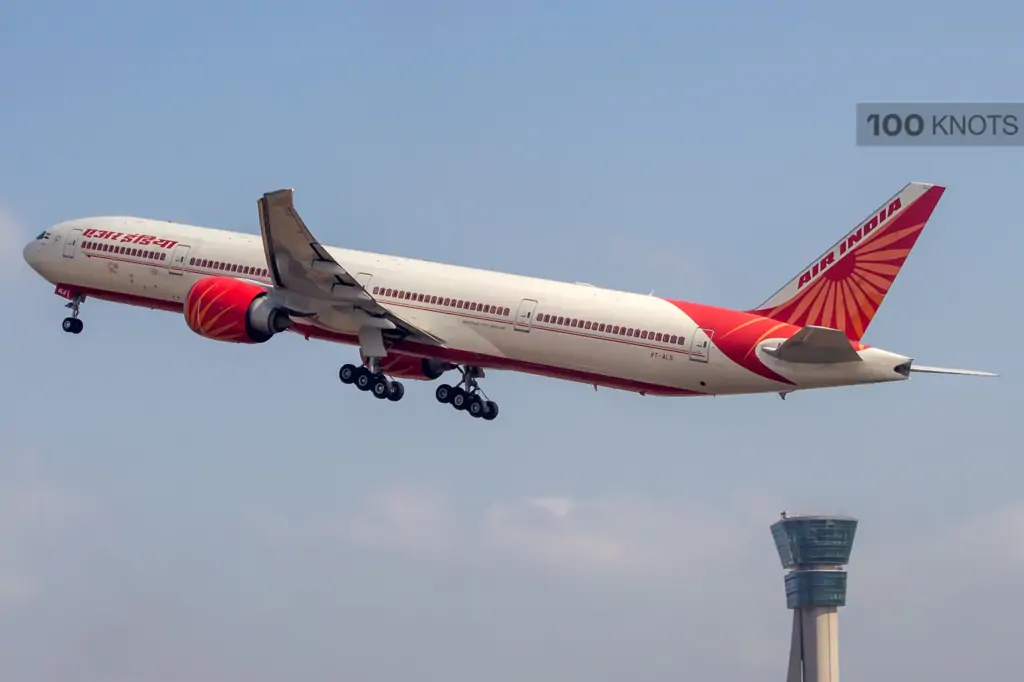
Air India is likely to replace the 'Maharajah' mascot as the airline undergoes a revamp, according to a report by the Economic Times. The report also suggested that the Maharajah image may continue to be used at the airline's airport lounges and premium classes. The airline has had a variety of logos over the ages including a centaur, the rising sun and a flying swan through the decades, the Maharajah was introduced a year before India's independence in 1946.
The Maharaja mascot was created by Bobby Kooks in 1946 when he managed the airline's operations as Air India's commercial director. Currently, no-modern day airline has a mascot representing its brand, the person cited above told ET.
The airline is slated to get a new livery featuring red, white and purple colours. Red and white are Air India’s colours. Purple likely denotes the colour of Vistara, post the airline's merger with Air India. The report mentioned that the Airbus A350 planes will be the first ones to sport the new look after their induction in November this year.
The Tata Group announced the consolidation of its airlines - Vistara and Air India. The transaction is estimated to be completed by March 2024. Tata Sons acquired a 100% stake in Air India on January 27, 2022, through its fully-owned subsidiary, Talace Private Limited.
Design consultancy firm FutureBrand has been hired to revamp Air India’s branding strategy. Previously, FutureBrand has reinvented the branding for American Airlines and the British luxury car company Bentley. It also worked for the 2012 London Olympics. FutureBrand will rework Air India's identity as the carrier aspires to compete against the big names in the industry which includes Emirates and Singapore Airlines. The new brand identity is expected to be unveiled in August, along with a series of print and digital advertisements. McCann Worldgroup, under Prasoon Joshi, will oversee the advertising and marketing for the airline.
The new branding is likely to be unveiled in August, Economic Times reported citing people familiar with the matter. Adman Prasoon Joshi-led McCann Worldgroup has been appointed for the advertising and marketing campaign.
As the brand attempts to rival luxury airlines like Qatar and Emirates Airways, it wants to de-link its image from the Maharajah, a person in the know of the developments told the business daily. “A large section of the fliers will be business travellers, corporate executives. Maharajah, who wears a turban and has an outsized moustache, though a very successful story, doesn’t resonate anymore with these kinds of customers. It has also been maligned, repurposed multiple times.” Moreover, no modern global airline has a mascot, the source said.
The Tata Group is looking to refurbish the image of the airline with several new changes in the pipeline. The introduction of new seats, the retirement of old aircraft and the refurbishment of cabins are some of the things the group is planning for Air India.
Air India is also looking to consolidate multiple low-budget airlines, on July 26, AirAsia India sought approvals from the Directorate General of Civil Aviation (DGCA) to speed up its merger with Air India Express. The airline also sought to be rebranded from AirAsia India to Air India Express, sources familiar with the matter told Mint.
(With Inputs from The Economic Times)

Read next
Air India Takes a Step Forward in its Transformation Plan; Upgrades Cabin & Inflight Magazine
Radhika Bansal
26 Jul 2023
Air India on July 25 announced the introduction of Upgrade+, which will allow guests with eligible bookings to purchase instant, confirmed upgrades to the front cabins at fixed prices. Upgrade+ enables Air India guests to opt for upgrades to premium cabins between 72 hours and 12 hours before a flight, subject to availability, the airline said in a press release.
As an alternative, passengers of Air India can purchase cabin upgrades when checking in at the airline's airport counters. With the introduction of Upgrade+, Air India has ended its "Bid Upgrade" programme, which allowed passengers with qualified reservations to bid for cabin upgrades and wait for upgrade decisions for up to four hours before the departure of their flight.
These premium cabins include 'premium economy', available on select flights to North America, 'business class' on all domestic and international routes, and 'first class' on select long-haul routes. "Air India guests will receive the benefits of the upgraded cabin, such as increased baggage allowance, priority check-in at dedicated counters, boarding and baggage handling, onboard amenities, and a delectable culinary experience," the airline said.
With Upgrade+, Air India guests will receive the benefits of the upgraded cabin, such as increased baggage allowance, priority check-in at dedicated counters, boarding and baggage handling, onboard amenities, and a delectable culinary experience. However, the fare conditions of the original booking will apply to upgraded bookings, including cancellation, rebooking fees, and accrual of Flying Returns miles.
For airline flights, passengers who have confirmed Air India-issued booking documents are entitled to choose upgrades utilising Upgrade+. Either they would get an email inviting them to upgrade their reservations, or they could use the Upgrade+ website's widget to see if they qualified.
New Inflight Magazine
Air India has launched its all-new inflight magazine named namaste.ai, as part of its transforming journey. The magazine is available on all of Air India’s domestic and international flights. The magazine is being positioned as a premium travel and lifestyle magazine and reflects Air India’s vision of becoming a world-class global airline with an Indian heart. The inaugural edition of the magazine features a cover story of legendary JRD Tata – the “father of Indian aviation”, to celebrate his birth anniversary on 29th July. Tata founded the airline 90 years ago. The 88-page-long magazine is the first to be released since Air India returned to the Tata Group after 69 years. Campbell Wilson, CEO and MD, of Air India, said wrote in the magazine, “A new Air India is taking off and we are eager for your feedback as we make progress.”
Airline’s Transformation under Tatas
Air India is navigating through a major five-year transformation roadmap under the aegis of Vihaan.AI, with an ambition to become a world-class airline with an Indian heart. The first phase of this transformation, the taxi phase was recently concluded and focused on fixing the basics. These included bringing back to service many long-grounded aircraft, the addition of talent across flying and ground functions, rapid upgradation of technology and strengthening of customer care initiatives amongst others.
The company had placed an order of 470 aircraft across Boeing and Airbus in February this year. Air India MD and CEO Campbell Wilson recently said that the airline would increase its wide-body fleet by 30 per cent as it plans to add six new A350 aircraft, five leased B777-200LR planes and nine B777-300ER aircraft during this fiscal year.
Wilson also recently stated that he and other Air India executives visited Apple's Palo Alto office to explore opportunities for 'even deeper collaboration'. He had in May mentioned that the airline is exploring opportunities to collaborate with Apple on issues such as improvement in flight-planning software which pilots use. In a previous message to the airline's employees, Wilson added that the company is set to add 500 new flight crew members to service in the coming months.
Read next
FLY91 to Start Regional Connectivity Soon; Awarded First Set of Routes Under UDAN 5.0
Radhika Bansal
26 Jul 2023

Fly91, under Just Udo Aviation Pvt Ltd, a new airline helmed by top aviation veterans has been allocated its first set of routes under the government's Regional Connectivity Scheme (RCS) UDAN. The routes given under UDAN 5.0 will see FLY91 connect the cities of Sindhudurg, Jalgaon, Nanded and Agatti with business and leisure destinations of Bangalore, Goa, Hyderabad and Pune. The allotment of these routes comes as a launch pad for FLY91 to begin their proposed commercial operations later this year, subject to regulatory approvals.
"We are truly delighted to embark on this journey and excited to have been allotted Jalgaon, Sindhudurg, Nanded and Agatti as our initial regional airports for starting our RCS operations," said Manoj Chacko, MD & CEO of FLY91. We are committed and are on track to launch our commercial operations, subject to regulatory approvals, later this year from our home base Goa, he added.
The Ministry of Civil Aviation (MoCA) concluded the 5th round of bidding for various UDAN routes at the 5th Helicopter and Small Aircraft Summit, 2023 in Khajuraho, Madhya Pradesh. This round of UDAN focuses on category-2 (20-80 seats) and category-3 (>80 seats) sectors to ease the restrictions on the distance between the origin and destination sectors.
Fly91's Strategy
While speaking to 100 Knots Manoj Chacko, MD & CEO of FLY91 mentioned FLY91's distribution strategy will be "open digital distribution," meaning the airline will be digitally enabled. The airline's inventory will be available for everyone to buy or consume. We want to position ourselves as one of the last five airlines in the country, so if any airline wants to pick up the inventory and sell it as their own, we are more than happy for them to do. It can be either a domestic airline or an international airline. Mr. Chacko said,
"We don't want to be restricted to only providing a network to our airline. We are saying that we can provide the network to any airline. It could be domestic, it can be international, it can be low cost, it can be full service, it doesn't matter. We are creating a digital mechanism that can happen easily and seamlessly. For the Distribution side, the airline will provide an open API wherein anybody who wants to consume its content kit can easily eradicate it. "In the future, our content can even be sold on the bus booking website," Mr. Chacko said.
About the Upcoming Regional Airline
Fly91 is a regional carrier and it seeks to enhance air connectivity from tier 2 and tier 3 towns across India. The airline is promoted by Harsha Raghavan, the former head of Fairfax India and Manoj Chacko, former executive vice president of WNS Global Services. The airline aims to start flying in the October-December quarter. The airline will have the new Goa airport built by GMR as its main base, while the coastal state will also house the headquarter of an airline for the first time. The airline received its NOC in April 2023 and is in the process of getting its AOP. So if everything goes according to the plan, the airline expects to start its commercial operations at the end of this year. It all depends on the regulatory approvals.
FLY91 aspires to make air travel accessible to every Indian. Despite the considerable growth in air traffic over the past decade, the founders remain steadfast in their vision to enable the next 100 million Indians to take flight, with a focus on regional towns in India. This vision is reflected in their selection of an ATR 72-600 fleet, which is a smart choice for efficient and sustainable operations from most regional airports in the country. With a strong emphasis on customer service, FLY91 is committed to delivering reliable, comfortable, and affordable flights. Through our digital-first approach, we ensure efficient booking and travel experiences for passengers by making all touchpoints digitally accessible. Just as the code “+91” unifies India through seamless communication, FLY91 will strive to empower every Indian to connect with a larger community and chase their dreams.
Read next
Regional Airline Spirit Air to Acquire Britten-Norman BN2T-4S Islander Aircraft
Radhika Bansal
26 Jul 2023

India-based domestic commuter airline Spirit Air has signed a Letter of Intent (LOI) for the purchase of six factory new BN2T-4S turboprop Islander aircraft from UK aircraft manufacturer, Britten-Norman. The BN2T-4S is the largest variant of the Islander and is powered by twin Rolls-Royce (Allison) Model 250 turboprop engines. The new BN2T-4S model benefits from an extended cabin, allowing one more row of seats than the standard piston Islander.
“With its engines offering an impressive 400shp (flat rated) the aircraft has a 22% increase in disposable payload, whilst maintaining impressive short-field performance,” Britten-Norman said. The new BN2T-4S aircraft are fully IFR capable, including FIKI. The cockpit will be equipped with the latest Garmin avionics including PFD, MFD and electronic engine instrumentation, whilst the interior and seating will be designed to meet the customer’s closely defined requirements.
The new Britten-Norman aircraft has already achieved type certification with the Federal Aviation Administration (FAA) in late 2022 and has recently achieved validation in New Zealand. The aircraft is also in the process of being validated in India, amongst other countries.
“The Islander, both piston and turboprop, has a long-established history of operating successfully across India and the surrounding region. Its durability makes it highly suitable for operating in remote, semi-prepared locations. This sets the Islander apart within this aviation class,” Mark Shipp, technical director and head of design at Britten-Norman said. He added: “The enhanced capabilities of the BN2T-4S will suit Spirit Air’s requirements perfectly and we are very pleased to be working with them as the first operator of this variant of our great aircraft.”
Whilst its new fleet of aircraft is being built at Britten-Norman’s newly established UK facility, Spirit Air will initially take delivery of four fully factory-refurbished BN2T-4S Islanders to enable it to advance its entry into service. The regional airline will operate a fleet of BN2T-4S Islander aircraft on scheduled passenger services across India. The aircraft will provide vital sub-regional connectivity between remote grass airstrips and municipal sub-regional landing strips with the country’s key primary airports.
Spirit Air will initially take delivery of 4 factory-refurbished BN2T-4S Islanders from the manufacturer to allow the carrier to begin service while the new fleet is being completed at Britten-Norman's newly established UK facility. Job postings for the airline also mention a potential for King Air 250 pilots, although no announcement has been made concerning a forthcoming acquisition of the type.
“We are pleased to partner with Britten-Norman for the order of new BN2T-4S Islander aircraft in the STOL space for our commuter operations from short, grass airfields located in the districts of India. This aircraft has been used by Indian Navy between 1984 and 1999,” Capt. S. K. Verma, managing partner of Spirit Air said. He added: “We have an eternal commitment to connecting places and people together and strive to provide opportunities to create and live where they want. We will help make important resources available and fly our customers safely and efficiently even where the conditions are difficult.”
About Spirit Air
Spirit Air is an Indian commuter airline founded in 2008. After receiving its operating license in 2009, the company operated charter flights using Cessna 172 and Cessna 208 Caravan aircraft until 2015. In October 2022, the airline received certification from the Ministry of Civil Aviation (India) to operate scheduled commuter air flights.
Spirit Air is a regional airline based in Bangalore, India. The airline was formed and is now managed by a team of retired executives from India’s national carrier- Air India with experience spanning more than three decades in various streams of airline management. The carrier will operate a fleet of Britten-Norman BN2T-4S turboprop Islanders, connecting short, municipal landing strips and grass airfields with key cities across India. The airline will offer both scheduled passenger and perishable cargo services. Spirit Air has received NOC from the Ministry of Civil Aviation, Govt. of India to operate Scheduled Commuter Air Transport services.
About Britten-Norman
Britten-Norman is a world-leading sub-regional aircraft manufacturer specialising in twin-engine piston and turboprop STOL aircraft. The company is a UK-based SME, exporting 97% of circa 1,300 aircraft manufactured to date. Since 2010, the manufacturer has invested more than £30m in the local community and thus far created over 150+ skilled opportunities in Bembridge, Lee-on-the-Solent and Southampton.
In April 2023, the company signed Heads of Terms with Cranfield Aerospace Solutions for a merger. A consortium of CAeS investors comprising HydrogenOne, Safran Corporate Ventures (the corporate venture arm of Safran, a leading aerospace company), and the UAE-based investment firm Strategic Development Fund (SDF) will invest up to £10 million in the new company, including up to £5 million investment from HydrogenOne once the merger is finalised. Cranfield University and Motus Ventures will continue to retain shares in the new business. Britten-Norman’s existing owners, including lead investor Alawi Zawawi, will also join the new business. The investment will anchor further funding that is currently being raised to support the growth of the merged entity.
In addition to manufacturing the world-famous Islander aircraft and supporting its customers globally, Britten-Norman is a leader and innovator in the green “space race”, future-proofing air transport. A test and trials specialist, Britten-Norman’s research and development teams collaborate with pioneering technology innovators across all industries to help bring new technologies to market.
Read next
Airbus Contemplates Hiring Separate Leader For its Manufacturing Business

Abhishek Nayar
26 Jul 2023
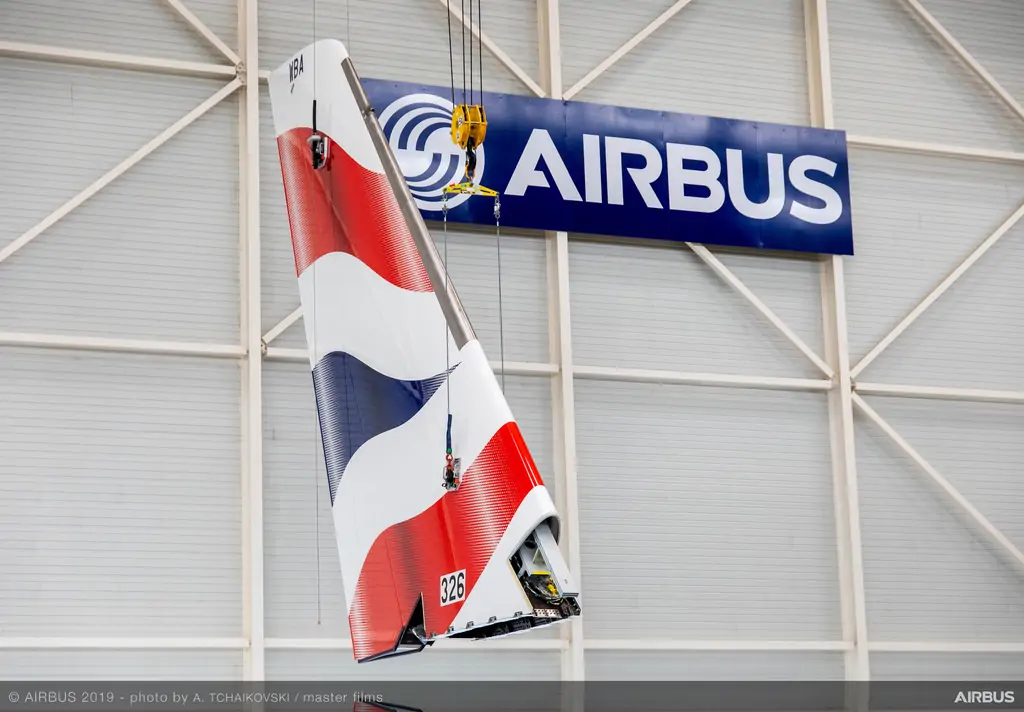
Airbus, a leading aerospace company known for manufacturing some of the world's largest commercial airplanes, is reportedly contemplating a management shuffle to address broader strategic priorities. The proposed reshuffling aims to reestablish a de facto separate head for its planemaking business, which would enable its CEO, Guillaume Faury, to focus on the wider strategic aspects of the aerospace and defense group.
Background on Airbus and Guillaume Faury
Founded in 1970, Airbus has become one of the world's foremost manufacturers of commercial aircraft, rivaled only by Boeing. With a diverse portfolio of aircraft, the company serves airlines and aviation enthusiasts globally. Guillaume Faury, a French-born executive with a rich background in aerospace engineering, has been at the helm of Airbus for a significant period of time.
The Current Management Structure
At present, Guillaume Faury holds a unique dual role within Airbus. He serves as both the CEO of the company's planemaking business and the CEO of the broader aerospace and defense group. While this arrangement might have its benefits, it has also raised concerns about the division of responsibilities and the ability to effectively tackle key strategic challenges.
The Need for a Management Shuffle
Considering the magnitude and complexity of Airbus's operations, there is a growing need for a dedicated leader to oversee the planemaking business exclusively. By separating this role from the broader CEO responsibilities, the company can streamline decision-making, enhance operational efficiency, and concentrate on producing cutting-edge aircraft. "We don't comment on rumors or speculation about organizational or personnel changes," stated an Airbus representative.
Any discussion of Airbus' management structure is laden with sensitivity due to the company's history of internal conflicts, which have occasionally affected industrial relations amongst the founding nations that still possess stakes: France, Germany, and Spain.
Benefits of Reestablishing a Separate Head for Planemaking Business
Focus and Expertise: Having a separate head for the planemaking business allows for focused attention on aircraft design, production, and innovation. This specialized expertise can lead to faster development cycles and higher-quality aircraft.
Strategic Agility: With a dedicated leader at the helm of the planemaking business, Airbus can respond more swiftly to market demands and industry trends, ensuring its competitiveness in a rapidly evolving aviation landscape.
Clear Accountability: Separating the roles clarifies accountability, making it easier to measure the success of the planemaking business and the broader aerospace group independently.
Guillaume Faury's Broader Strategic Priorities
As CEO of the entire aerospace and defense group, Guillaume Faury is tasked with steering the company through various challenges and opportunities. Some of his key strategic priorities include:
Sustainability: Developing and implementing eco-friendly aviation solutions to reduce the industry's environmental impact and contribute to a greener future.
Innovation: Continuously investing in research and development to introduce technological advancements that enhance safety, efficiency, and passenger experience.
Global Expansion: Exploring new markets and partnerships worldwide to expand Airbus's global footprint and increase its market share.
Digital Transformation: Embracing digital technologies to optimize operations, supply chains, and manufacturing processes.
Potential Challenges and Risks
While the proposed management shuffle presents several advantages, it is essential to acknowledge potential challenges:
Leadership Transition: Any change in management carries the risk of a transitional period, during which the new leadership adjusts to the role and its responsibilities.
Employee Morale: Internal restructuring can impact employee morale and productivity if not communicated effectively and handled with care.
External Perceptions: Investors, customers, and other stakeholders may closely monitor the transition, leading to speculation and uncertainty.
Conclusion
In conclusion, Airbus's consideration of a management shuffle is a strategic move aimed at addressing broader priorities while ensuring the continued success of its planemaking business. By having a dedicated leader for the planemaking division, Airbus can leverage specialized expertise and navigate the complex aerospace landscape more effectively. Concurrently, Guillaume Faury's leadership in broader strategic aspects positions Airbus to drive innovation and growth in the industry.
With Inputs from Reuters
Read next

In a significant development for the aviation industry, the Civil Aviation Authority of Malaysia (CAAM) has recently granted Type Certification to Embraer's E-jets E2 family of commercial jets, specifically the E190-E2 and E195-E2. This achievement marks a major milestone for Embraer and opens up new opportunities for the aviation market in Malaysia.
Understanding Type Certification
What is Type Certification?
Type Certification is a crucial process in the aviation industry, where an aircraft model undergoes rigorous testing and evaluation to ensure its compliance with safety and performance standards set by the civil aviation authorities. This certification attests that the aircraft is safe and airworthy for commercial operations.
The Importance of Type Certification
Type Certification is vital for aircraft manufacturers as it validates their products' safety and reliability. It also enables airlines to confidently operate certified aircraft, knowing that they meet the required safety standards.
Embraer's E-Jets E2 Family
The E190-E2 and E195-E2
Embraer's E-jets E2 family comprises the E190-E2 and E195-E2 models. These next-generation aircraft boast advanced technology, improved fuel efficiency, and reduced emissions compared to their predecessors. The E2 family has gained popularity among airlines worldwide for their exceptional performance and passenger comfort.
Approval from Leading Aviation Authorities
The E190-E2 and E195-E2 models received their initial approvals in 2018 and 2019 from three major civil aviation authorities: the Federal Aviation Administration (FAA) in the United States, the European Union Aviation Safety Agency (EASA) in Europe, and the Agência Nacional de Aviação Civil (ANAC) in Brazil. The recent Type Certification from Malaysia's CAAM further solidifies the aircraft's global acceptance.
SKS Airways and E195-E2 Selection
A Strategic Decision
During LIMA'23, Malaysia's premier aerospace and maritime exhibition, SKS Airways made a strategic move by selecting ten E195-E2s to support its regional expansion aspirations. This decision came following the CAAM's grant of Type Certification to the E2 family.
Advantages of the E195-E2
SKS Airways' choice of the E195-E2 highlights the aircraft's appeal to airlines seeking enhanced operational efficiency and passenger experience. The E195-E2's spacious cabin, extended range, and eco-friendly features position it as an attractive option for regional carriers aiming to modernize their fleet.
The Impact of Certification
Boosting Confidence in the E2 Family
The Type Certification by Malaysia's CAAM reinforces the reputation of Embraer's E-jets E2 family as a reliable and safe choice for airlines globally. This official stamp of approval is likely to attract more airlines and increase demand for these cutting-edge aircraft.
Expanding Regional Connectivity
With SKS Airways' announcement of E195-E2s, Malaysia's regional connectivity is expected to improve significantly. The aircraft's ability to operate on both short and longer routes will open up new possibilities for airlines to expand their services to various destinations, supporting tourism and business travel.
Comments
"Following our comprehensive assessment, CAAM is pleased to grant Embraer's E195-E2 and E190-E2 aircraft type certification validation." "We appreciate Embraer's collaborative spirit towards our goal of instilling a safety culture to ensure the highest level of safety, security, and efficiency in the Malaysian aviation industry," stated Captain Norazman Bin Mahmud, CEO of the Civil Aviation Authority of Malaysia.
"The E2's CAAM certification is fantastic news for Embraer and the industry," remarked Martyn Holmes, CCO of Embraer Commercial Aviation. "It lays the groundwork for the E195-E2 to enter service in Malaysia in 2024." The E2 series of aircraft is ideal for supplementing larger aircraft and expanding regional connectivity within Malaysia and beyond, all while delivering outstanding performance in terms of lowest fuel burn, smallest noise footprint, and excellent passenger comfort."
"With its remarkable efficiency and economics, Embraer's E2 family of aircraft is reshaping the landscape of regional aviation in Asia Pacific," stated Raul Villaron, VP Sales & Marketing, Commercial Aviation, Head of Region Asia Pacific. "It is a compelling solution that enables airlines to broaden their network and establish unique routes in the region."
Conclusion
Embraer's E-jets E2 family's Type Certification by the Civil Aviation Authority of Malaysia is a momentous achievement that underscores the aircraft's top-notch safety and performance. The decision of SKS Airways to select the E195-E2 further demonstrates its value to the aviation industry. With this certification, the E2 family is set to make a positive impact on Malaysia's aviation sector, promoting growth, efficiency, and connectivity.
With Inputs from Embraer
Comment