
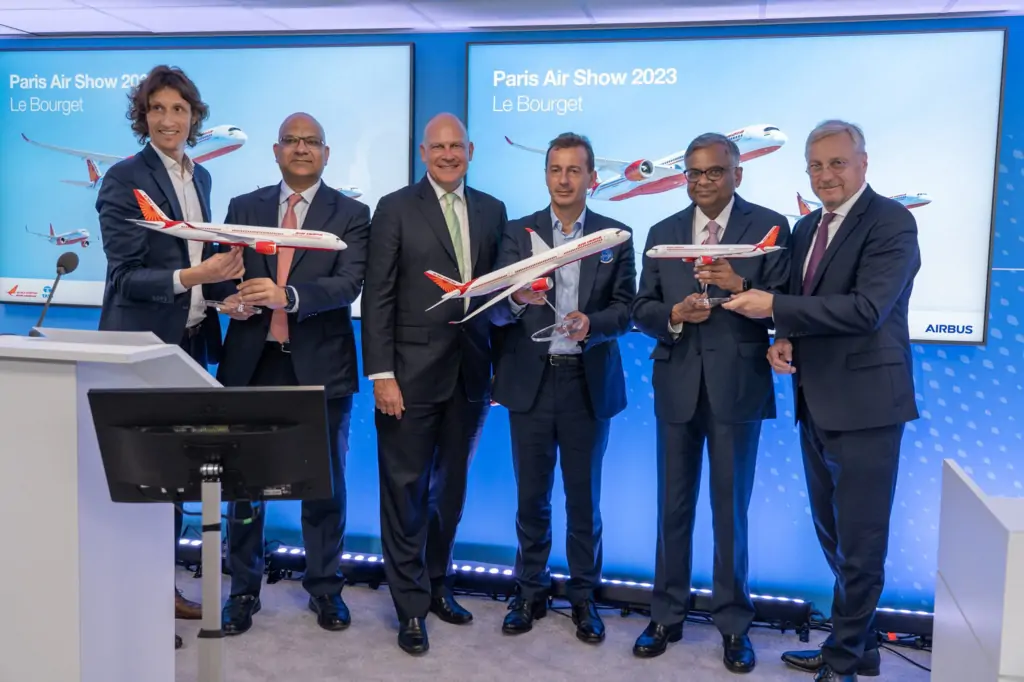
Months after placing one of the largest orders in aviation history of 470 aircraft, Air India on June 20 finalised the deals to buy 250 planes from Airbus and 220 with the option to acquire 70 additional jets from Boeing. The Tata group-owned carrier signed the purchase agreements with both companies on the sidelines of the ongoing Paris Air Show. The aircraft to be acquired are valued at USD 70 billion at list prices, the airline said in a release.
"This landmark step further positions Air India for long-term growth and success that, we have every hope, will come together to represent the best of modern aviation to the world," said N Chandrasekaran, the chairman of Air India and its parent entity Tata Sons.
From Airbus, the France-headquartered aerospace company, Air India has placed an order for 140 A320neo and 70 A321neo single-aisle aircraft as well as 34 A350-1000 and six A350-900 wide-body jets. The airline had signed a letter of intent to acquire these aircraft, along with the 220 planes from Boeing, in February 2023. The order from the US-based Boeing includes 190 737 MAXs, 20 787 Dreamliners and 10 777X jets, with the option to acquire 70 additional planes, including 50 737 MAXs and 20 787 Dreamliners. This is Boeing's largest order in the South Asia region.
Air India CEO and MD Campbell Wilson signed the purchase agreements with both companies. It said, "Our ambitious fleet renewal and expansion programme will see Air India operate the most advanced and fuel-efficient aircraft across our route network within five years. We are proud to be working with all our partners in this journey to rebuild a global airline which reflects India taking a more confident posture around the world.”
Aircraft Deliveries & Specialities
The Airbus A350 will lead the new aircraft deliveries later this year, with the bulk of the order to arrive from mid-2025 onwards. Air India has already started taking delivery of 11 leased B777 and 25 A320 aircraft to accelerate its fleet and network expansion.
“The fuel-efficient mix of next-generation airplanes including the 737 MAX, 787 Dreamliner and 777X will sustainably power Air India’s future fleet in the world’s fastest-growing commercial aviation market,” said Stan Deal, President and CEO of Boeing Commercial Airplanes.
“We are excited to be a key partner in the reinvention of the Flying Maharaja. Under the leadership of the Tata Group and a focused new management, this is one of the most ambitious projects in the airline business today. We are proud that the efficiencies, comfort and range capability offered by our latest generation aircraft will contribute to the process, as Air India reclaims its rightful position as a world-class premium carrier", Christian Scherer, chief commercial officer and Head of International at Airbus, said.
The release noted that Satair, an Airbus company, and Boeing Global Services would support Air India with various solutions, including parts and maintenance provisioning, digital applications, and modification services. Over the next 20 years, South Asia is expected to more than triple its in-service fleet from 700 to 2,300 aeroplanes to meet passenger demand, Boeing said in the statement.
The Airbus services package is a perfect future-oriented choice that will form a core element of Air India’s transformation,” added Christian Scherer, Chief Commercial Officer and Head of International at Airbus.
IndiGo's Aircraft Order
The deal comes a day after Indian civil airline company IndiGo on June 19 placed an order for 500 Airbus A320 Family aircraft in the largest purchase agreement in aviation history. This historic deal is pegged at $50 billion at list prices and the airline will take delivery of these new aircraft between 2030 and 2035. However, the actual cost of acquisition is expected to be significantly lower as such big deals happen at a substantial discount to list prices. The current order comprises a mix of A320 Neo, A321 Neo, and A321 XLR aircraft.
Air India's deal that had in drafted in February 2023, made it the then-biggest order ever placed. However, IndiGo's 19 June order seems to have upped the ante.
IndiGo, which operates a fleet of 300 planes, is yet to take delivery of some 500 jets from previous orders with Airbus. This puts the total deliveries by planemakers to Indian carriers at more than 1,500 over the next decade and beyond - double India's existing fleet of 700 planes across all airlines.
The number of domestic air passengers in India is expected to surge to 350 million by 2030, up from 144 million in 2019, with international air travellers up to 160 million from 64 million in 2019, according to aviation consultancy CAPA India and government data. The number of airports in India is also set to climb to 200 over the next five years from 150 today, as the government looks to connect the country's remotest areas by air.

Read next

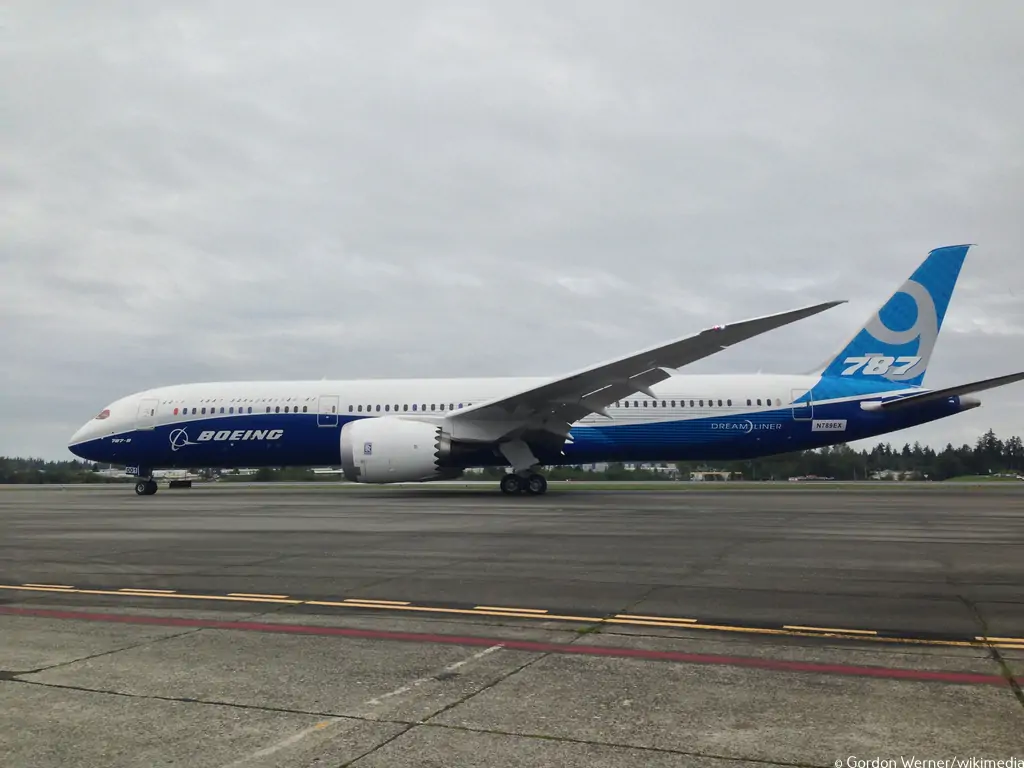
Boeing has been at the forefront of aviation innovation for decades, consistently pushing the boundaries of technology and design. The Boeing 787-9 Dreamliner is a prime example of their commitment to excellence. This state-of-the-art aircraft offers a range of features that cater to both airlines and passengers, providing an unparalleled flying experience.
The Boeing 787-9 Dreamliner: An Overview
The Boeing 787-9 Dreamliner is a state-of-the-art aircraft known for its fuel efficiency, advanced technology, and exceptional passenger comfort. As an extended version of the 787 family, it offers increased seating capacity and improved performance compared to its predecessors. The Dreamliner's aerodynamic design and use of composite materials contribute to its fuel efficiency, reducing operating costs for airlines.
The First Order: Significance and Implications
Boeing had previously reported that the eight 787-9 orders came from an anonymous customer, which has now been proven to be China Airlines. The airline adds to the 16 787-9s ordered last year to replace its ageing Airbus A330 aircraft, giving it one of Asia's youngest and most efficient widebody fleets.
The Dreamliners will join the airline "over the next several years" and will increase capacity and flexibility on its regional network; prior projections put the first Dreamliner arriving in 2025, with all aircraft delivered by 2028. The 787 will join China Airlines' widebody passenger fleet, which also includes the Boeing 777-300ER, Airbus A350-900, and Airbus A330. When compared to current-generation aircraft, the 787 may deliver up to 20% less fuel usage and emissions, allowing for cleaner and more efficient operations. The 787 family is selling at its fastest rate in history, with over 250 orders and commitments received in the last six months.
China Airlines' Growing Fleet
With the recent order of eight Boeing 787-9 Dreamliner planes, China Airlines continues to expand its fleet. This Taiwanese carrier is known for its commitment to quality and safety, and the addition of the Dreamliners to its aircraft lineup reinforces its dedication to providing an exceptional travel experience for its passengers. The larger 787-10 model, chosen for six of the orders, allows China Airlines to accommodate more passengers while maintaining the Dreamliner's renowned features. The 787-10 can accommodate up to 40 additional passengers than the 787-9 model (in a two-class configuration), although this greater capacity comes at the sacrifice of about 1,200 nm of range.
Environmental Considerations
As the aviation industry strives to reduce its carbon footprint, the Boeing 787-9 Dreamliner plays a crucial role in achieving this goal. The aircraft's fuel efficiency translates to lower carbon emissions, making it an environmentally friendly choice for airlines. Additionally, the Dreamliner's noise-reducing engines contribute to a quieter flying experience, benefiting both passengers and communities near airports.
Conclusion
Boeing's receipt of an order from China Airlines for eight Boeing 787-9 Dreamliner planes at the 2023 Paris Air Show demonstrates the company's continuous success in the aviation sector. The remarkable qualities of the Dreamliner, including fuel efficiency, passenger comfort, and environmental concerns, make it a tempting alternative for airlines wishing to expand their fleets. China Airlines' choice to swap six of its orders to the bigger 787-10 variant highlights the Dreamliner family's versatility and adaptability.
With Inputs from Boeing
Read next
De Havilland Canada Introduces the New Variant of DHC-6 Twin Otter Classic 300-G
Radhika Bansal
20 Jun 2023
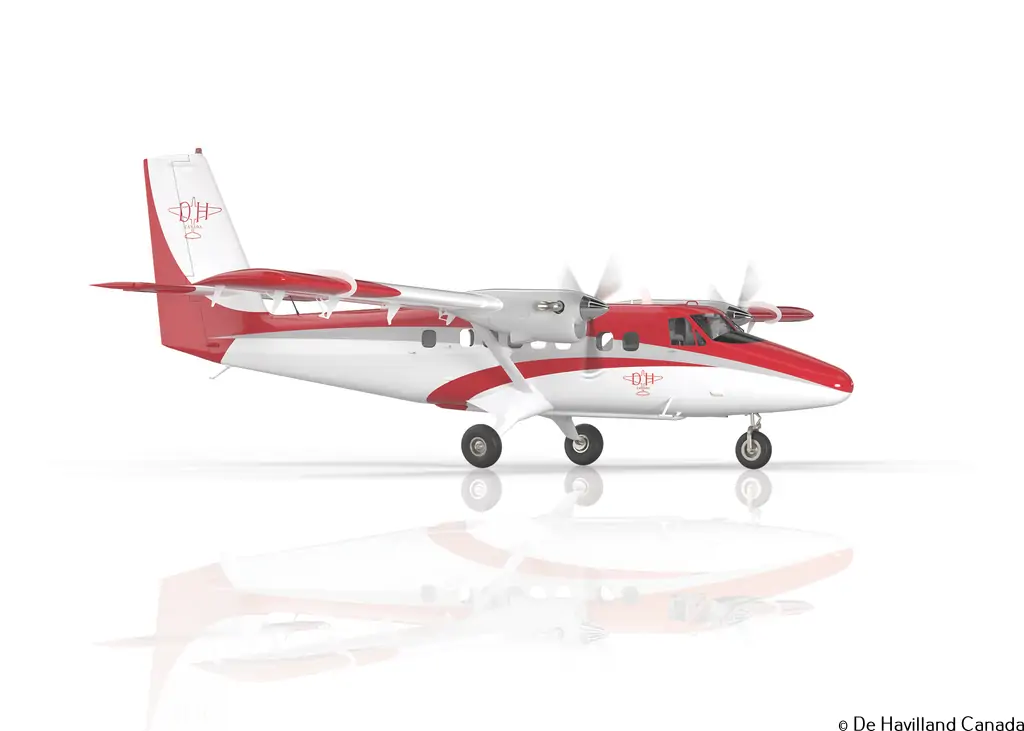
De Havilland Canada has announced the launch of its newest aircraft, the DHC-6 Twin Otter Classic 300-G, at the Paris International Air Show. The aircraft manufacturer also confirmed that it already has combined purchase agreements and letters of intent for 45 aircraft in place. The Classc 300-G is the fifth generation of the Twin Otter aircraft, joining the current Series 400.
Throughout the Paris International Air Show, which opened on June 19, De Havilland Canada plans to announce the purchase agreements with its newest customers. The launch of the DHC-6 Classic 300-G marks the latest milestone in the momentous life story of one of commercial aviation's truly great aircraft. The Classic 300-G is the fifth generation of the Twin Otter aircraft and joins the current Series 400 currently in production by the company through its parent, Viking Air.
“For over 50 years, the DHC-6 Twin Otter has stood alone as the most reliable and versatile aircraft in its class,” said Brian Chafe, CEO of De Havilland Canada. “After extensive consultation with our customers, we are poised and proud to take this iconic aircraft to new heights with the new DHC-6 Twin Otter Classic 300-G. With the same rugged airframe, propelled by Pratt & Whitney technology, the lighter weight Classic 300-G will deliver increased payload range and decreased operating costs for our customers,” added Chafe. “Along with an all-new cabin interior and flight deck featuring the Garmin G1000 NXi fully integrated avionics suite, De Havilland Canada is once again driving the utility transport aircraft market forward.”
Features of the new aircraft
All DHC-6 Twin Otters can carry passengers, transport VIPs, move cargo, conduct medivac operations and perform special missions. The aircraft can also be mounted on amphibious floats to allow take-off and landing from water.
“De Havilland Canada continues to shape aviation with innovative utility aircraft, and we are proud to offer our G1000 NXi integrated flight deck with the latest version of the iconic DHC-6 Twin Otter,” said Carl Wolf, Garmin vice president of Aviation Sales and Marketing. “The G1000 NXi will bring wireless cockpit connectivity, enhanced situational awareness, visual approach capability, and our fully integrated GFC™ 700 autopilot with envelope protection to the Classic 300-G aircraft.”
The plane will still be capable of STOL operations, taking off from runways just 1,200ft (366m) in length and landing in just 1,050 ft (306m). Despite its upgraded performance, the new aircraft would still be capable of landing on the world's shortest commercial runways, such as that located at Saba Airport in the Caribbean, into which its older sisterships operate regularly.
Over its nearly 100-year history, De Havilland Canada has delivered more than 5,000 aircraft. With the Twin Otter set for something of a renaissance with today's launch of the DHC-6 Classic 300-G, it will be interesting to see how the market unfolds for the latest version of this veritable workhorse of world aviation.
The Twin Otter is a popular choice for conducting medevac, passenger and cargo transport, as well as other special missions, particularly due to its ability to operate in remote areas. A feature on the benefits of using turboprop aircraft to deliver emergency medical services (EMS) will appear in AirMed&Rescue’s August 2023 edition.
New Aircraft Orders
Following on from the reveal of the new airplane, De Havilland shared that the first customer for the new Twin Otter will be Jetcraft Commercial. The sales and leasing specialist signed a purchase agreement at the air show today for 10 new models. Deliveries will begin in 2024, but the value of the contract has not been disclosed.
India’s flybig has also placed a firm order with De Havilland Aircraft of Canada for two DHC-6-400s and signed a Letter of Intent for another up to ten newly announced DHC-6-300-G aircraft during the ongoing 2023 Paris Air Show.
"Twin Otters are the perfect aircraft for India's UDAN regional airport development program, part of the Regional Connectivity Scheme (RCS) for improving underserviced air routes and connecting Tier 2 and Tier 3 communities. Our two -400 aircraft will help realise our Honorable Prime Minister Narendra Modi's vision to connect India's hinterland, and we are looking forward to working with De Havilland Aircraft of Canada on potential future acquisitions of the new Classic 300-Gs," Chairman and Managing Director Sanjay Mandavia said. "With the addition of this new aircraft the DHC-6 Twin Otter Series 300-G, looking ahead we are excited to announce our plans for further expansion of our services now to North India by offering connectivity to Uttarakhand, Uttar Pradesh, and Punjab. Our plans include adding Dehra Dun, Pithorgarh, Pantnagar, Hindon, Ludhiana, and Bathinda to our network."
The Indian regional specialist will become the first operator of the DHC-6-400 in India. The airline’s fleet currently comprises one ATR72-500 and two ATR72-600s. The carrier recently secured an undisclosed strategic investment from Florida-based Royal Bengal Holding Inc. The only current operator of Twin Otters in India is Saarthi Airways, which operates a single -300 on behalf of the Geological Survey of India.
flybig signed a Letter of Intent for five firm DHC-6-400 orders and five options in 2022. The deal has not been finalised. flybig did not respond to ch-aviation's request for comment if the new commitment that would replace last year's LOI.
Read next
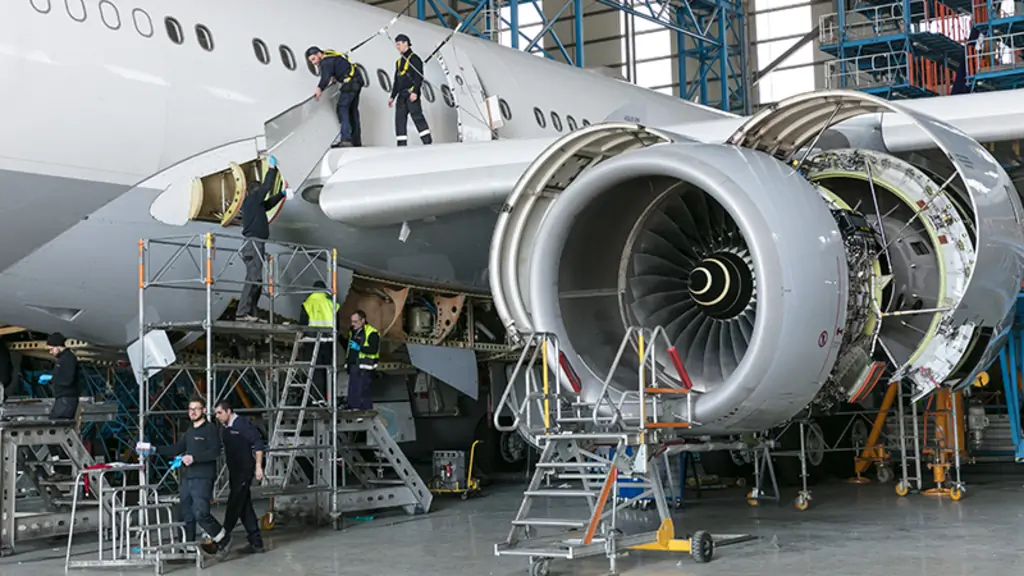
According to a report by research agency CRISIL Ratings, the revenues of domestic maintenance, repair and overhaul (MRO) services providers in the aviation sector are expected to triple from around INR 1,800 crore currently to INR 5,500-6,000 crore by fiscal 2028. This increase in revenue will be driven by factors such as the expansion of airplane fleets, favourable policies and ongoing investment in airports, says CRISIL.
According to the report, the demand for MRO services, which correlates highly with the size of the aircraft fleet, will get a shot in the arm from substantial orders that airline operators have placed to purchase aircraft. It added that the domestic fleet — around 700 units as of March 2023 — is expected to be more than 1,000 units by 2027.
Strong growth in domestic civil aviation, government support, and ongoing MRO capex at airports should help lower costs and improve utilisation, as per the study based on three MRO services providers, accounting for more than 90% of the industry’s revenue, indicates. MRO services will be in high demand as it correlates with the aircraft fleet size. From around 684 aircraft by the end of FY23, Indian carriers are likely to have 1,400 aircraft by the end of FY30, as per estimates made by CAPA India.
“Consequently, the overall amount spent by Indian airlines on MRO services (both domestic and global) is projected to surpass INR 25,000 crore by 2028 from around INR 14,000 crore levels last fiscal,” the report said. It added that opting for domestic MRO services is generally considered cost-effective in terms of fuel and logistics and saves time as well.
MRO services comprise activities such as inspection and maintenance of aircraft and its components, including engine and airframe, to ensure the availability and airworthiness of aircraft. These play an important role in ensuring airworthiness and availability of aircraft. In India, airlines spend around 12-15% of their overall revenues on maintenance, which becomes the second most expensive item after fuel (45% of operating expenses).
Most of India’s MRO players, including Air Works, Deccan Charters and GMR Aero Technic, are privately owned. Air India Engineering Services, which is the only state-owned MRO company and also the largest in the country, is in the process of being privatised. CRISIL’s report is based on the study of three MRO services providers which account for more than 90% of the industry’s revenue, the agency said.
“The domestic MRO industry’s penetration rate is expected to reach 22-24% by fiscal 2028 from 12% at present, piloted by the less-complex line-maintenance services,” said Ankit Hakhu, Director, CRISIL Ratings, in a press statement. “The engine and component maintenance segment, where global technology companies are investing to develop local capability, should also see penetration improve.”
Noting that the revenue of domestic MRO providers has been minuscule so far, the research agency added that revenue per domestic aircraft for Indian operators is less than INR 5 crore against more than INR 400 crore in Singapore, which caters to demand from other countries, including for aircraft from India.
“The government has introduced several policies over the past year to realise its vision of making the country a global MRO hub,” said Varun Marwaha, Associate Director, CRISIL Ratings, in a press statement. “The upshot of these will be a 10-20% reduction in the overall cost of MRO services.”
The government has introduced several initiatives to boost the domestic MRO business. These include reducing the goods and services tax on MRO services from 18% to 5%; land lease via open tenders instead of predetermined rates, abolishing the 13% royalty charged by government authorities on revenue and allotting land to MRO service providers for 30 years instead of the current 3-5 years.
Delhi and Bengaluru airports have set up dedicated MRO facilities for select private airlines, with more underway. Two MRO facilities near the upcoming Jewar Airport (UP), Belagavi (Karnataka), Bhopal (Madhya Pradesh) and Tirupati (Andhra Pradesh) airports are planned.
Read next
Air India Seeks Regulatory Approval for Using Air India Express & AirAsia India as a Single Brand
Radhika Bansal
20 Jun 2023
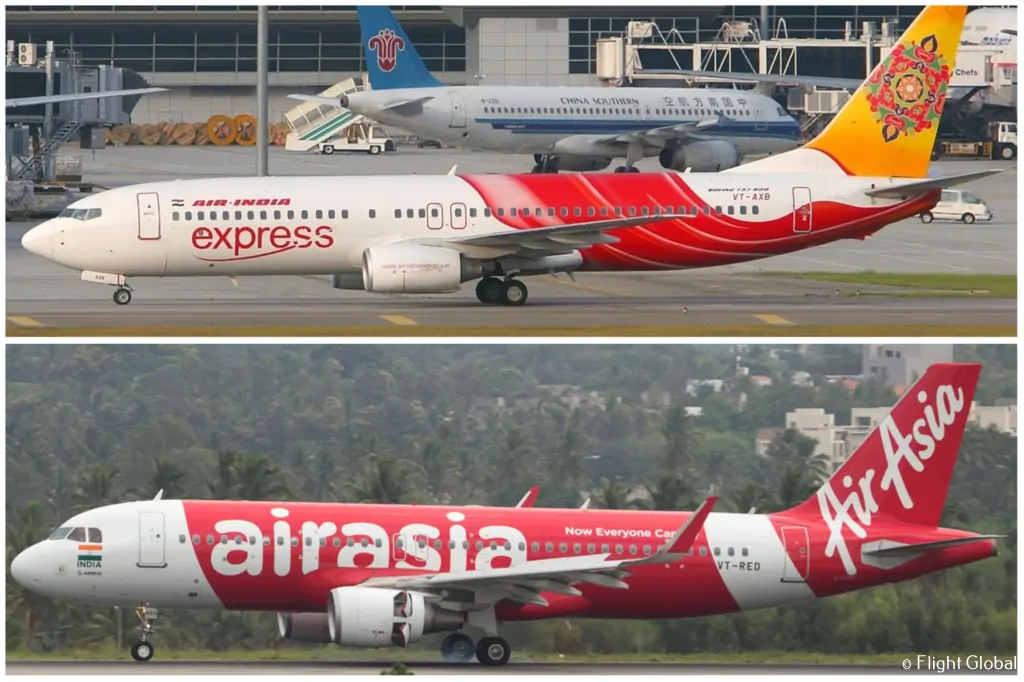
Tata Sons owned Air India has approached civil aviation regulator DGCA for a waiver on merger laws for Air India Express and AirAsia India. It wants approval to cross-utilise pilots and cabin crew and sell tickets as a single brand before the merger process is approved by the NCLT.
Such clearance would expedite economic synergy between the two airlines, allowing them to plan routes, market, and sell tickets as a single business. It will also reduce operational costs by leveraging each other’s workforce. This is significant since AirAsia India does not fly international routes, while Air India Express exclusively serves Middle Eastern destinations from towns in Kerala.
“While the two airlines now have a common booking engine and website, if a passenger searches for an international flight from cities like Mumbai or Delhi to Gulf, there are no flights available. The company is not able to take advantage of a common network yet,” a company official said.
The Tata group is in the process of integrating all four airlines into becoming two airlines: a low-cost carrier by combining AirAsia India and Air India Express, and a full-service carrier by integrating Air India and Vistara.
While the merger of Air Asia India and Air India Express has been permitted by the Competition Commission of India, the Registrar of Companies and the NCLT have yet to sanction it. Internally, the airline has implemented a single CEO, a centralized booking system, a website, social media, and customer service channels.
Once the merger is finalized, the new company is expected to bring revenue, cost, and operational benefits through broader adoption of each airline’s best practices, systems, and routes, and conferring greater economies of scale. The new Air India Express will focus on leisure-oriented and price-sensitive markets while improving connectivity between key domestic cities and Air India's fast-expanding international network.
Witing for Regulatory Approvls
“The group wants to fast-track the process so that it can take better advantage of the synergy and start common branding. The low-cost airline needs to capture the minds of customers for whom these are two separate entities with different service standards.”
Government insiders, however, said that the DGCA is unlikely to comply and would instead wait for the two airlines to integrate their air operators. “Currently AirAsia India and Air India Express operate on two air operator’s permits (AOP) which can happen only after NCLT and ROC’s approval. Cross utilization of each other’s crew and operating as a single brand will only be possible after the merger of the two AOP and forming common operating manuals,” a government official said.
According to the company official stated above, if the DGCA does not grant the waiver request, AirAsia India and Air India Express will enter into a code-sharing agreement, which is a standard practice throughout the world but is unusual in this situation since it is between two airlines from the same group. “In the absence of DGCA approval, the two airlines cannot be branded as a single one, but code sharing will allow AirAsia India’s domestic network for sale under the Air India Express code for tickets purchased in all international points where the airline operates.”
AirAsia India will become the world’s second-biggest low-cost carrier by the end of fiscal year 24 after adding 50 new Boeing 737 Max aircraft to its current fleet of 54 aircraft. Cambodia, China, Indonesia, the Philippines, Turkey, and Vietnam are among the countries where the airline aims to grow.
Cabin Crew & Pilot Hiring
Air India Express and AirAsia India together have recruited more than 800 trainee cabin crew members in the last year. Besides, Air India Express, which is the international budget arm of Air India, has added over 280 pilots during the one year from June 2022. The induction process, which started in June last year attracted a diverse pool of candidates, through joint walk-in recruitment drives conducted across various metro cities and small towns.
Last year, Tata Group acquired Air India along with Air India Express and a 50% stake in ground handling firm Air India SATS Airport Services Pvt Ltd (AISATS). The Group currently fully owns three airlines -- Air India, Air India Express and AirAsia India while it holds 51% ownership in its joint venture airline with Singapore Airlines, Vistara, which is also being merged with Air India.
The large-scale recruitment is a significant milestone in the ongoing process of merging AirAsia India with Air India Express, as per the release. Following the selection process, a significant number of trainees underwent comprehensive training at Air India Express' Mumbai facility, leveraging the combined expertise of both airlines, it added.
(With Inputs from The Economic Times)
Read next
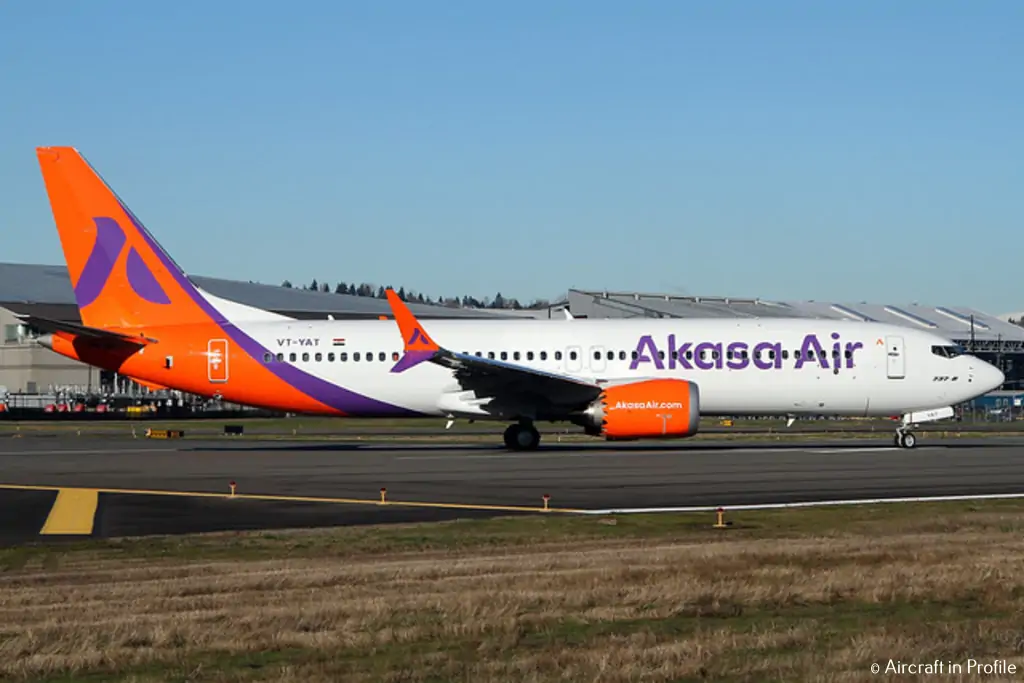
Akasa Air is in talks with Boeing to place a small follow-on order for 737 Max single-aisle jets if it can lock down financing, according to people familiar with the matter. The US planemaker is working to finalize negotiations as soon as this week at the Paris Air Show, according to a report by Bloomberg.
The report further mentioned that funding is one obstacle, after the death of Akasa’s billionaire founder and the failure of India’s Go Airlines, they said, adding there’s no certainty an accord will fall into place. If an agreement comes together, Akasa may order 10 or fewer aircraft, one of the people said.
Akasa, India’s newest airline, began flying just last year. The carrier has received 20 of the 72 Max jets it’s already ordered. Akasa Air now flies to 17 destinations across India, with Kolkata being its second in West Bengal after Bagdogra, which launched in March. The addition of the capital is significant since Akasa now flies to Mumbai, Delhi, Chennai, and Kolkata, all four major metro cities in the country.
In March, Chief Executive Officer Vinay Dube said the low-cost carrier would place a three-digit order for more aircraft by year-end. Since then, Go Airlines’ insolvency has made aircraft lessors wary of further exposure to the market. Akasa has said that, by March 2024, its fleet will grow to 28 aircraft.
Akasa Air mentioned the following in a tweet -
- No airline in the history of global aviation in 150 years has seen this rate of growth
- Akasa is one of the top 2 OTP players in India till Feb'23
- We'll place a 3-digit aircraft order by the end of 2023
- We'll hire 300 pilots in the next 12 months.”
India’s famously cutthroat aviation industry is seeing blockbuster orders from newly-privatized Air India, and market leader IndiGo is expected to double its jet backlog with a 500-plane order at the show. Akasa’s Founder, billionaire Rakesh Jhunjhunwala, died in August, raising questions about the airline’s future funding.
Akasa Air Plans to Raise USD 75-100 Million
Akasa Air is looking to raise USD 75-100 million by offering fresh shares to expand its business, a report has said. The airline, founded in December 2021, wants the money to make pre-delivery payments for aircraft, the Economic Times quoted sources as saying. The Mumbai-based airline ordered 72 Boeing 737 Max, of which 19 have been delivered. The move to raise funds will dilute the Jhunjhunwala family’s 46% stake in the airline. The family holds this stake through a trust and despite the potential dilution, it will remain the largest shareholder.
The airline, which commenced operations less than a year ago, has reached out to potential investors, including PE firms and high-net-worth individuals, for raising capital. Any infusion of capital will be based on a USD 650-million valuation. US-based hedge fund PAR Capital Management is one of the names doing the rounds and may subscribe to the shares to add to its existing 6% stake in the low-cost airline. Brokerage firm ICICI Securities said on June 12 the outlook for airlines remained strong due to healthy traffic growth, declining jet fuel prices and ticking ticket values.
A source said the Jhunjhunwala family has the right of first refusal on any equity fundraising the airline plans. A spokesperson for Akasa Air called this speculation and refused to comment. The report said that Utpal Seth, senior partner and CEO of Rare Enterprise, Jhunjhunwala’s investment outfit, and PAR Capital didn’t respond to queries.
"Think of the airline as a startup and look at this as its next round of fundraising. The kind of ambitions the airline has, would money from the Jhunjhunwalas be enough to sustain them?" a source was quoted as saying in the report. "The answer is no. Also remember the Jhunjhunwalas are financial investors and not promoters, as is the case with several airline ventures in India."
Akasa’s first commercial flight was on August 7, 2022, between Ahmedabad and Mumbai. Jhunjhunwala passed away a week later. Starting its operations last year, Akasa Air has leveraged its startup advantage to design a low-cost structure with reduced lease rents. The easy availability of pilots after the pandemic also helped Akasa.
"The trust is unlikely to participate in this round of funding but even after the dilution will retain a substantial stake. The aviation sector is on a boom and the value of Akasa with strong financials and led by professionals will only rise," the report quoted a source as saying.
As per the report, the airline initially received a startup capital injection of USD 50 million from the Jhunjhunwala family, and with additional gains from aircraft sale and leaseback arrangements, the venture secured a capital base of USD 300-350 million, enabling its successful launch.
(With Inputs from Bloomberg)
Comment